
A new denim jacket can look perfect on the hanger and still become a problem once you take it home. One reported jacket kept a strong kerosene-like smell after six washes, even after baking soda, white vinegar, and fabric spray. Other reported jackets left black dye on hands and phone cases during normal wear. Another arrived with debris, stains, signs of wear, and a strong chemical-like odor inside the pockets.
The problems do not stop there. Some jackets became stiff and rough after washing, with wearers reporting itching and redness when the fabric touched bare skin.
These cases point to a simple buying lesson: appearance alone is not enough. Before wearing a new denim jacket, check its smell, color transfer, condition, and feel after washing. A few simple checks can reveal problems before the jacket becomes part of your daily wardrobe.
When Denim Smells Like Kerosene: Why Vinegar and Multiple Washes Do Not Remove It
Opening a new denim jacket should not come with a smell so strong that you hesitate to put it anywhere near your closet. Yet in one reported case, the kerosene-like chemical odor remained after six washes, even after baking soda, white vinegar, and fabric spray were tried one after another.
The frustrating part is that repeated washing can make you feel as though you are doing everything right—while the jacket still smells exactly the same.
A documented case, OFH-AUDIT-4MKJ, describes precisely this pattern: the odor survived repeated washing and several home deodorizing attempts, while the same jacket also developed a failed pocket seam after the second wear and a snap that broke on its first use.
That combination matters. When a smell disappears after one normal wash, it may simply be a temporary finishing odor. When the smell keeps returning after repeated cleaning, however, the problem may not be sitting only on the surface of the fabric.
🧴 Smell the Jacket Before Washing Again
Take the jacket into a well-ventilated room and smell the fabric at the collar, pockets, and inner seams separately. If the same sharp chemical smell is coming from multiple areas rather than one isolated spot, repeated spraying may simply be masking the problem instead of solving it.
Denim is a tightly woven cotton fabric designed to hold together through regular wear. Quality denim is commonly made from substantial cotton twill, with heavier examples around 12–14 oz, and proper care calls for cold washing rather than aggressive heat.
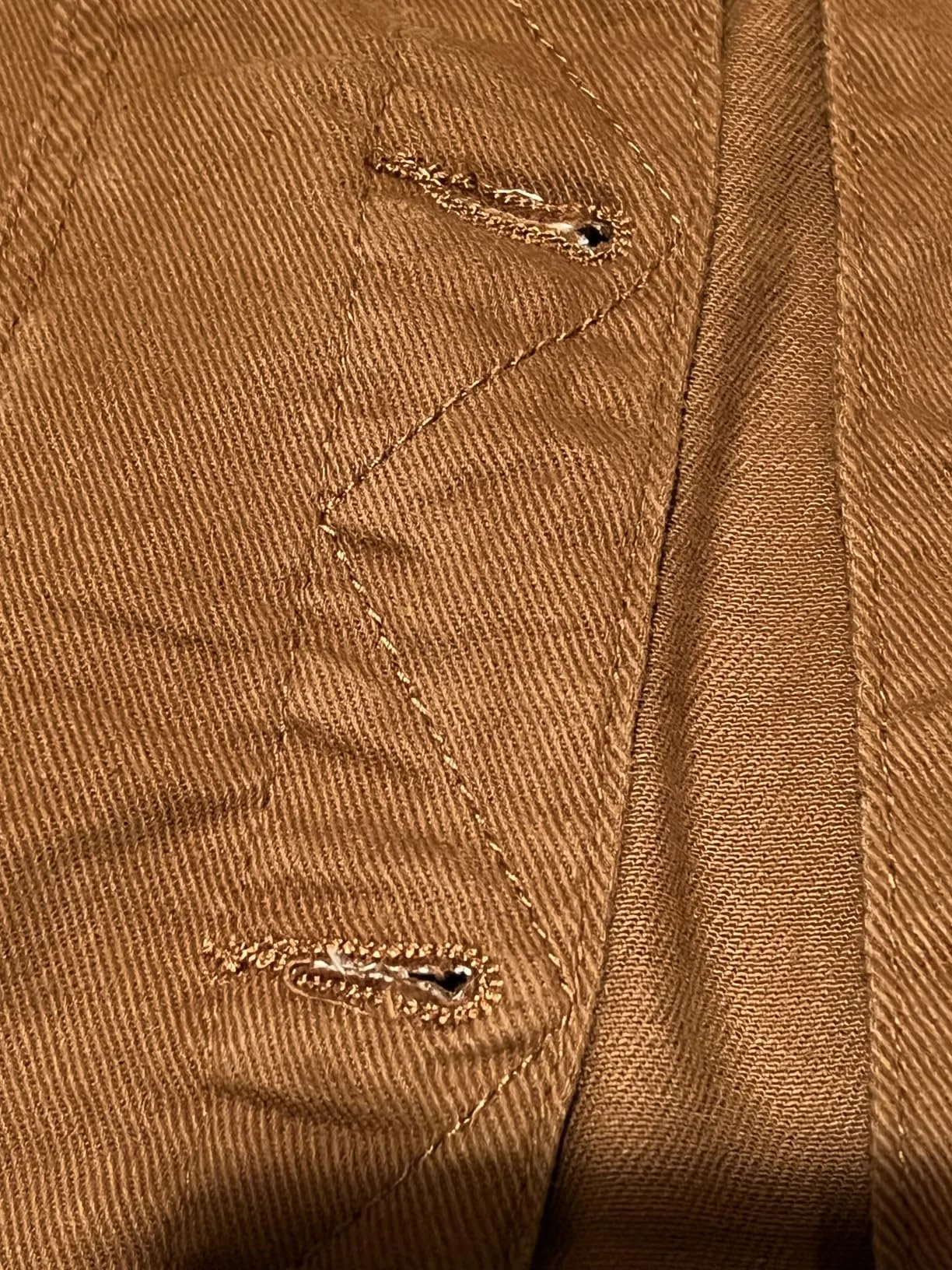
That does not prove every persistent odor comes from a particular solvent. But the reported pattern here is difficult to treat as an ordinary "new denim smell": the jacket continued producing a strong chemical odor after six washes and several deodorizing methods.
So if your new jacket still smells like kerosene after multiple laundering attempts, stop assuming that one more wash will magically fix it. This particular reported case deserves a more cautious look before you spend more time—and more laundry cycles—trying to make it wearable.
Preventing Dark Denim Dye from Rubbing Off on Hands, Upholstery, and Phone Cases
A new black denim jacket should not leave you looking like you spent the afternoon handling printer ink. Yet that is exactly what happened in two reported cases: hands and phone cases turned black after contact, while the dye also threatened to spread through an entire load of laundry.
The problem becomes especially annoying when the jacket looks perfectly fine on the hanger. You put it on, rest your wrists against a desk or car seat, reach for your phone—and suddenly the things touching the jacket are wearing its color too.
In case OFH-AUDIT-933B, the black denim reportedly transferred enough color to stain the wearer's hands and phone case, with concern that machine washing could contaminate other clothes. A second reported case, OFH-AUDIT-MP8, described the same black-dye transfer onto hands and a phone case.
👋 Rub the Cuffs Before You Leave
Take a clean white tissue or light-colored cloth and firmly rub the inside and outside of a cuff for several seconds. If the cloth comes away visibly black, treat that as a warning sign before wearing the jacket against a pale bag, sofa, car interior, or light-colored clothing.
Dark denim can naturally release some color, particularly when new. But these reports describe something considerably more troublesome: enough loose dye to visibly blacken skin and personal belongings.
The underlying issue is that the dye has not been held securely enough to the fabric. In practical terms, color is escaping from the jacket and attaching itself to whatever it touches.
That is why the safest approach is not to judge a black denim jacket by appearance alone. Look for clear information about color-fastness and care, and test a dark garment before letting it spend a full day rubbing against expensive upholstery or accessories.
If a jacket repeatedly leaves black marks during ordinary contact, the inconvenience is no longer just about fading. It can turn into stained belongings, contaminated laundry, and another return you never wanted to make.
How Returned and Repackaged Garments End Up with Odors, Stains, and Pocket Debris
Opening a supposedly new denim jacket and finding crumbs, used tissues, and unexplained stains inside it is a very different experience from discovering a loose thread. One reported buyer encountered exactly that, along with an odor described as ammonia-, chlorine-, or cat-urine-like.
The case OFH-AUDIT-RTN included foreign debris inside the garment, visible pink and black staining, signs of wear, and a strong chemical-like smell that reportedly survived multiple washes.
That makes the first few seconds after opening the package worth paying attention to. A garment should not require you to investigate what the previous occupant may have left behind.
🔎 Open Every Pocket Before You Wear It
Turn the jacket inside out and check every pocket, seam, and lining under good light. Look for crumbs, tissue fragments, unexplained marks, flattened fabric, or anything that suggests the garment has already been handled or worn.
The reported case does not establish how the contamination occurred or prove that every stained or foul-smelling garment was previously returned. It does, however, show why a "new with tags" presentation should not automatically be treated as proof of pristine condition.
Odor is another useful warning sign. A persistent smell resembling ammonia, chlorine, or stale urine is particularly difficult to ignore when it arrives together with visible staining and foreign debris.
And if you find those signs together, do not simply toss the jacket into your regular laundry and hope the problem disappears. Photograph the condition immediately, including the packaging, stains, pockets, and any debris, before washing or wearing the garment.
For this reported case, the combination of unusual debris, staining, odor, and visible wear makes the purchase worth treating cautiously. A jacket sold as new should arrive looking and smelling like a new garment—not like someone else's unfinished return.
Why Certain Denim Jackets Become Itchy and Stiff Against Bare Skin After Washing
You wash a new denim jacket expecting the fabric to settle down. Instead, it comes out stiff, rough, and noticeably more irritating, with reported wearers experiencing intense itching and redness when the washed fabric sits against their chest or back.
That pattern appeared in two reported cases, OFH-AUDIT-933B and OFH-AUDIT-MP8, where users specifically described the jacket as itching after washing. The problem is especially frustrating when the discomfort only becomes obvious after the first machine wash.
The available evidence links this experience to finishing residues and fabric treatments that may become more noticeable after laundering. However, the reports themselves establish the itching experience—not a specific chemical cause in either individual jacket.
🖐️ Feel the Fabric After It Dries
Once the jacket is completely dry, run your bare fingertips slowly across the inside surface, especially over the chest and back panels. If the fabric feels hard, scratchy, or unusually abrasive instead of simply firm, do not assume that wearing it repeatedly will make the irritation disappear.
A denim jacket can naturally feel structured, particularly when new. But a clear change toward greater stiffness and scratching after washing deserves attention when it is accompanied by itching or redness.
Certification can provide another screening point. OEKO-TEX® Standard 100 is designed to test textiles for harmful substances, so checking whether a garment carries a recognized textile-safety certification can reduce uncertainty about what was used during processing.
Still, certification alone cannot explain every case of post-wash itching, and its absence does not prove that a particular jacket contains irritating residues. What matters most is the combination of the garment's reported behavior and your skin's response.
If a jacket becomes significantly rougher after washing and repeatedly causes itching against bare skin, don't keep forcing yourself to wear it simply because it was expensive or looks good. A structured denim feel can be normal; persistent skin irritation is a separate warning sign worth taking seriously.
CONCLUSION
A denim jacket does not need to be perfectly soft or completely free of color release when it is new. Denim can naturally feel firm, and dark fabrics can release some dye during early wear. The concern begins when the behavior goes well beyond that.
A strong chemical smell that remains through several washes deserves more attention than an ordinary new-fabric smell. Visible black transfer onto your skin or belongings is a practical warning before you wear the jacket around light-colored surfaces. Debris, stains, or signs of wear inside a supposedly new garment should be documented before you wash it.
Pay attention to what changes after the first wash, too. If the fabric becomes noticeably rougher and repeatedly causes itching against bare skin, do not assume that continued wear will fix it. A careful inspection before wearing and washing can save you from turning a disappointing purchase into a long-running problem.
THE ULTIMATE BUYING VERDICT
| Verdict | Key Consideration | Recommendation |
|---|---|---|
| 🔴 Significant concerns | Persistent chemical odor, heavy dark-dye transfer, or a new garment arriving with debris, stains, or visible signs of wear | Treat these as strong warning signs. Document the condition and avoid assuming repeated washing will solve the problem. |
| 🟡 Acceptable with limitations | New denim may feel firm and some dark color release can occur, but the reported problems become concerning when they are unusually strong or continue during normal use | Check the cuffs for dye transfer, inspect every pocket and seam, and assess the fabric after it has completely dried. |
| 🟢 Meets long-term expectations | Denim that arrives clean and in new condition, does not have a persistent unusual odor, does not heavily stain items during normal contact, and remains comfortable after washing | Look for clear care information, check color-fastness before extended wear, and make sure the fabric remains comfortable after laundering. |