
A trench coat can look polished in photos and still disappoint the moment you wear it. You may discover that rain works through the fabric during a short walk, the sleeves overwhelm the body, or the coat feels too tight to cross your arms. Sometimes the problem is less obvious: buttons come loose, fabric pills after a few wears, or a coat arrives with deep vacuum-pack wrinkles and a color that looks nothing like the listing.
These problems are easy to miss when you judge a coat by its style alone. The useful approach is to check what the coat is made of, how its proportions work, how the closures are finished, and what condition it is in when it arrives. A few simple checks before wearing it outside can reveal whether the coat is likely to perform as expected—or become an expensive return.
DEFECT AUDIT OVERVIEW
| Product Area | Common Problems | Why It Matters |
|---|---|---|
| Rain protection | Water quickly works through the outer fabric | A rain-ready coat may not provide the protection you expect |
| Fabric and fit | Very low wool content, pilling, or restrictive proportions | The coat may feel less warm, durable, or comfortable than expected |
| Construction and delivery | Loose hardware, severe wrinkles, wrong color, strong odors, or missing items | Problems with closures, appearance, or delivered condition can make the coat difficult to use |
What Makes a Trench Coat Soak Through During a Short Walk in the Rain
A trench coat can look perfectly convincing on a dry morning and still fail the moment rain becomes more than a few drops. The frustrating part is that you may not discover the problem until your clothes underneath are already wet.
One reported case, anonymized as OFH-AUDIT-P04U, describes water passing through the outer layer during nothing more than a brief walk from a business to a car. The wearer expected rain protection but ended up with soaked inner clothing instead.
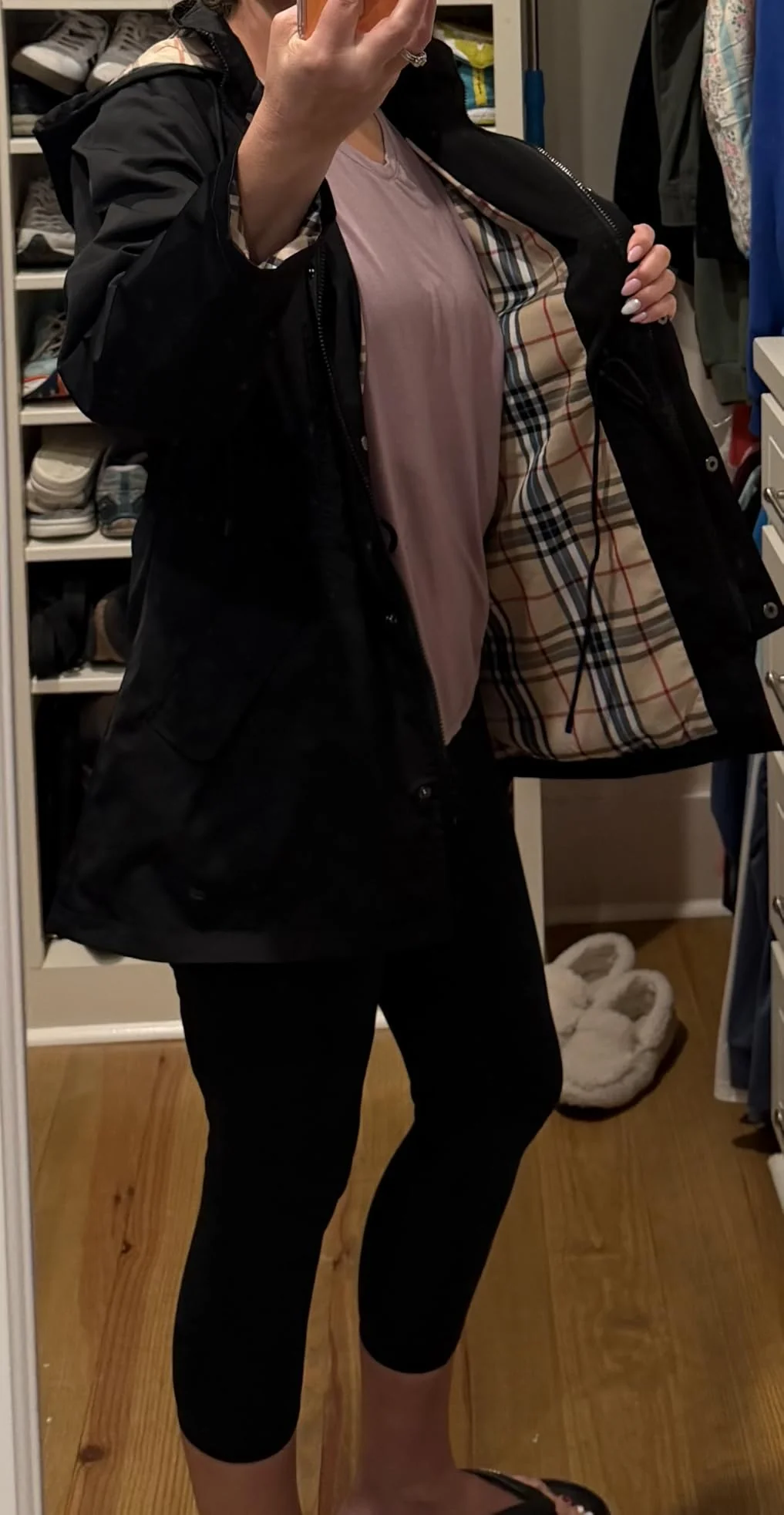
That is more than a cosmetic annoyance. If you are buying a trench coat specifically for commuting, the useful question is not simply whether the listing says "waterproof" or "water resistant." It is whether the fabric and finish can actually keep rain on the outside long enough for the coat to do its job.
💧 Pour a Little Water on the Surface
Before trusting a new coat for a rainy commute, place a few drops of water on an inconspicuous area of the outer fabric. Watch what happens: water that quickly spreads into the fabric is a warning sign, while a surface that makes the drops bead up is a much better indication that the outer layer is resisting moisture.
The reason this matters is straightforward. A well-made trench intended for wet weather uses a tightly woven fabric and may add a durable water-repellent finish to help rain stay on the surface rather than immediately soaking into the cloth. The quality guidance in the supplied evidence points to 280+ gsm cotton gabardine or a suitable technical blend with a DWR finish, along with details such as storm flaps for added protection.
If a coat is marketed as rain-ready but water quickly works through the outer layer, its real-world performance may fall well short of that promise. For a trench coat intended for regular wet-weather commuting, treat the rain claim as something to verify rather than something to take on faith.
How to Tell If a Wool-Blend Coat Has Enough Real Wool for Warmth
A wool-blend coat can look warm in a product photo while feeling surprisingly thin once it arrives. That mismatch matters when the coat is supposed to handle cold-weather wear rather than simply imitate the look of wool.
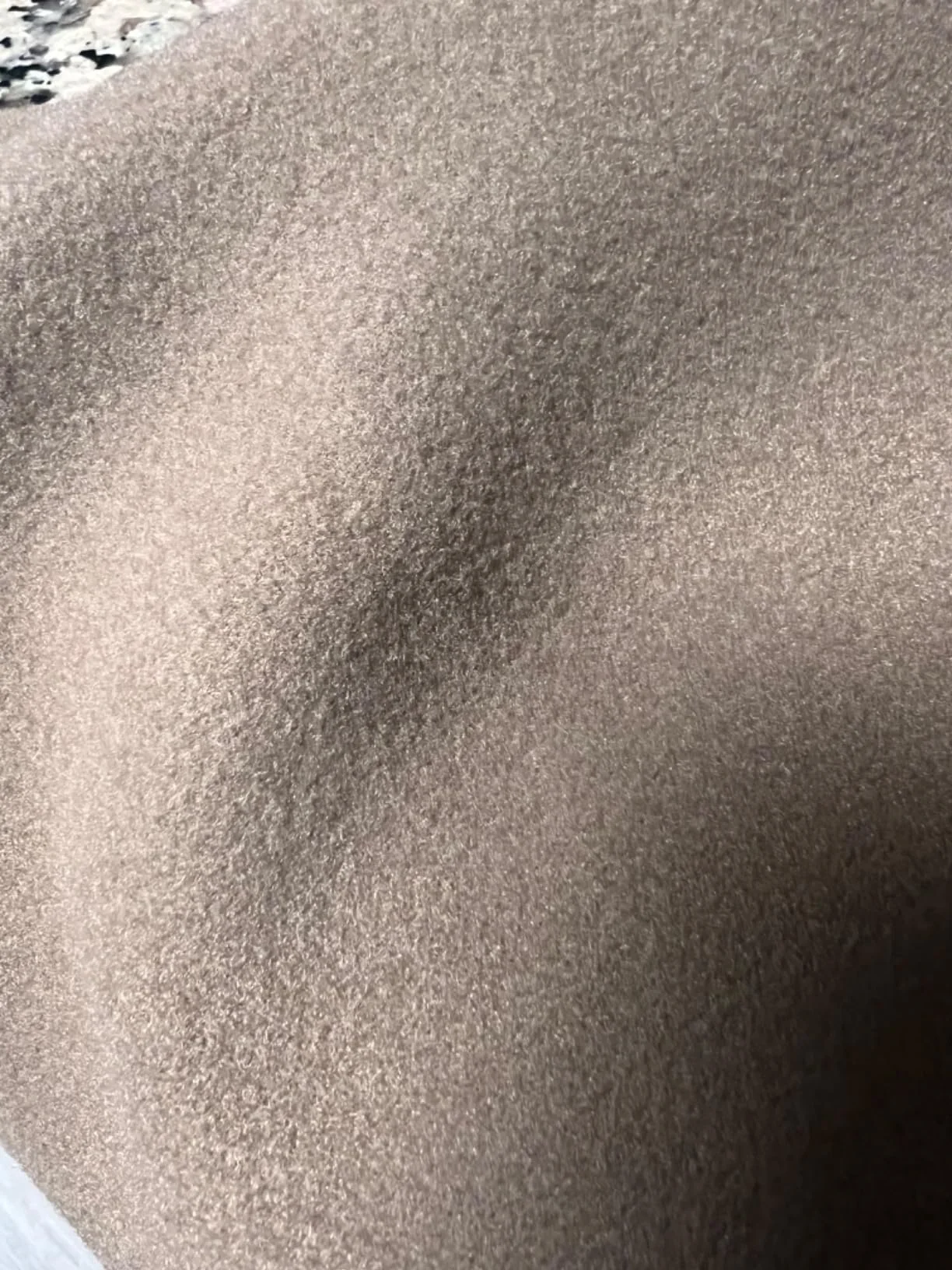
One reported coat, anonymized as OFH-AUDIT-ZCNT, was marketed as a wool or winter coat but was reported to contain only 10% wool. The fabric was also described as extremely thin and more like craft felt than a substantial wool coat. Another case, OFH-AUDIT-3CZ6G, carried a wool description while the reported material was actually polyester. That makes the fiber percentage worth checking before you judge a coat by its name. "Wool blend" does not tell you how much wool is actually doing the work.
🔍 Look at the Fiber Percentage First
Open the material composition and find the actual wool percentage rather than relying on phrases such as "wool look," "wool coat," or "winter fabric." The quality guidance supplied for this category points to 30% or more wool in a wool blend, with another reference specifying 18.5-micron Merino wool for a more substantial option.
The reason wool content matters is simple: wool fibers can trap air and help move moisture away, giving the garment a more comfortable range across changing temperatures. A coat made with very little wool may still have a wool-like appearance, but that does not automatically give it the same feel or cold-weather performance.
There is also a useful visual clue. If the coat is unusually thin, rough, or flimsy despite being presented as a warm wool outer layer, pause before assuming the label tells the whole story.
The two reported cases show why composition deserves more attention than the product title. For a coat you expect to keep you warm, the fiber percentage and the actual fabric feel should tell a consistent story.
Common Collar and Sleeve Proportions That Throw Off Trench Coat Fit
A trench coat can have the right size on the tag and still look completely wrong once it is on your body. The collar, body length, chest width, and sleeve length have to work together; when one proportion drifts too far, the whole silhouette can feel awkward.
One reported case, anonymized as OFH-AUDIT-ZCNT, had an unusually small top collar compared with the length of the coat. The collar could not close properly, leaving the front looking visibly out of balance.
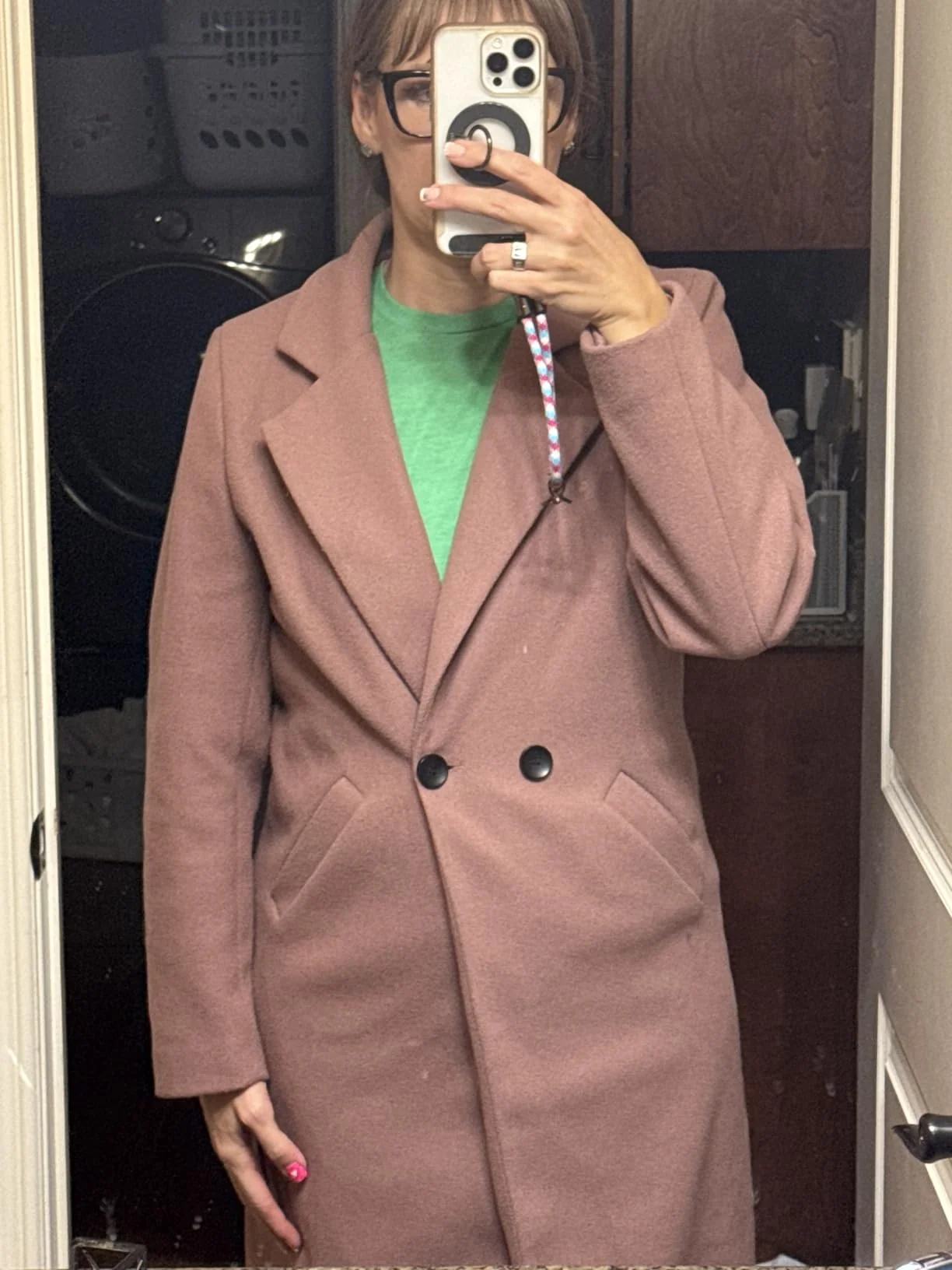
Another case, OFH-AUDIT-TST1, went in the opposite direction: the sleeves were disproportionately long while the body was noticeably shorter. The result was a coat whose individual parts might have looked acceptable in isolation but did not make sense together when worn.
👀 Try the Collar Before Judging the Fit
Stand naturally and close the coat as you normally would. If the collar feels too small to sit or close comfortably while the rest of the coat still has plenty of room, the problem may be the cut rather than your size.
Then let your arms hang naturally and look at where the sleeves end. A sleeve that extends far beyond the wrist while the body looks unusually short can make the coat appear borrowed rather than tailored.
This is especially important with structured outerwear because you are not judging one measurement at a time. A roomy chest cannot compensate for sleeves that are too short, and longer sleeves cannot rescue a collar that throws off the front of the coat.
When the proportions are noticeably inconsistent, sizing up or down may simply move the problem around instead of fixing it. A coat with a convincing trench-style appearance should still make sense from collar to cuff when you actually put it on.
Why Outerwear Sizing Issues Can Restrict Arm Movement When Crossing Arms
A coat can technically be your usual size and still make basic movement frustrating. If you cannot comfortably bring your arms across your body, the problem is not just whether the coat feels snug—it is whether the cut gives you enough room to move.
One reported case, anonymized as OFH-AUDIT-ZPTD, described a fit so restrictive that the wearer could not comfortably cross her arms despite choosing a size she expected to fit. Other reports on the same coat also described major size inconsistencies, with different sizes failing in very different ways.
That kind of failure becomes especially annoying with outerwear because you need to move your shoulders constantly: reaching for a car door, carrying a bag, adjusting a seat belt, or simply folding your arms while waiting outside.
🧥 Cross Your Arms Before You Keep the Coat
Put the coat on over the layers you would normally wear, let your arms relax, and then cross both arms firmly across your chest. You should be able to do this without the shoulders pulling sharply, the sleeves riding dramatically upward, or the coat becoming so tight that you have to force the movement.
If you immediately feel trapped around the upper body, do not assume ordering two sizes larger will automatically solve it. A separate reported coat, anonymized as OFH-AUDIT-3CZ6G, was described as requiring two sizes up because the original sizing ran substantially narrower than expected.
The practical problem is that oversizing can create a new set of fit issues rather than fixing the original one. You may gain room around the body while ending up with excessive length or proportions that no longer sit correctly.
For a trench coat meant for everyday movement, the useful standard is simple: you should be able to cross your arms without fighting the garment. If that basic motion fails, the listed size may be telling you much less than the actual cut.
Signs of Poor Construction in Fast-Fashion Buttons, Buttonholes, and Zippers
Small hardware problems can turn an otherwise wearable coat into something you cannot rely on. A button that comes off during the first fastening attempt or a zipper that fails before the coat has had a reasonable run is not a minor finishing flaw—it can take the main closure out of service.
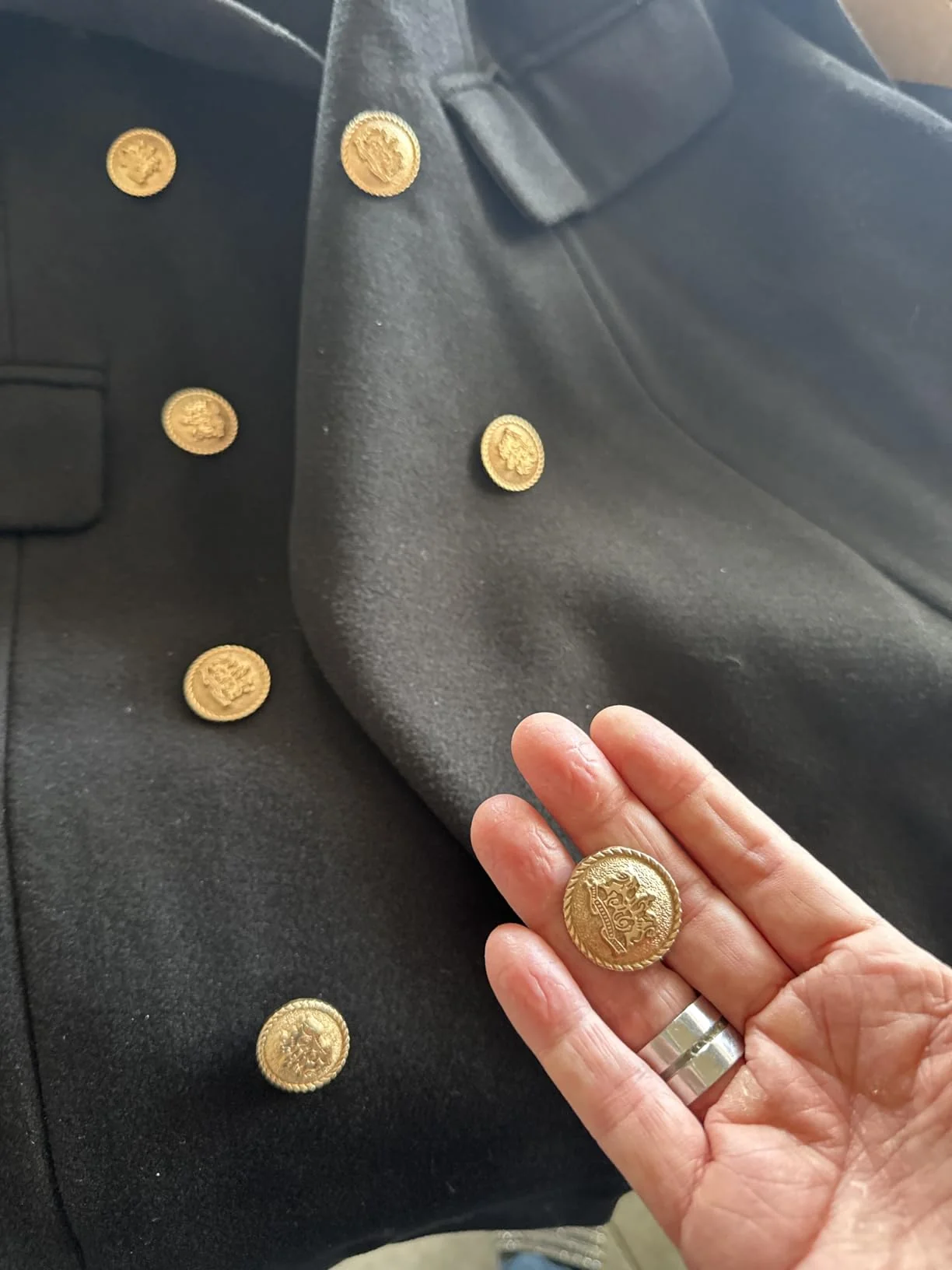
One reported case, anonymized as OFH-AUDIT-GTST1, arrived with no usable buttonhole for the top button, while two buttons came off during the first attempt to fasten the coat. The same reports also described buttons that did not line up properly.
A separate case, OFH-AUDIT-P04U, developed a zipper failure after less than a year. Once the zipper stopped working, the garment was also reported to begin coming apart around the surrounding sections, leaving the coat with a much bigger problem than a stuck pull.
🔧 Fasten Every Closure Before You Wear It Outside
With the coat lying flat, button and unbutton every closure once, then run the zipper from bottom to top and back again. Look for buttons that wobble excessively, holes that are poorly finished, misaligned closures, or a zipper that catches instead of moving cleanly.
These details matter because the areas around buttons, cuffs, and other high-use points receive repeated pulling during ordinary wear. The quality guidance supplied for trench coats specifically points to reinforced stress points and double stitching, while also identifying metal hardware from established suppliers as a durability feature.
The lesson is less glamorous than choosing a beautiful color, but much more useful: hardware is part of the coat's everyday function. When the closure fails, the fabric around it can no longer compensate.
A coat with attractive fabric and a convincing silhouette still deserves caution if its buttons, buttonholes, or zipper feel poorly finished. The reported failures above show why these small details can determine whether outerwear remains usable or quickly becomes a return.
What Causes Coat Fabrics to Pill and Bunch After One Machine Wash
A coat should not start looking worn out after a handful of wears or a single wash performed according to its care instructions. Yet some garments can develop fuzz, pills, and clumps across the surface so quickly that they look old almost immediately.
One reported case, anonymized as OFH-AUDIT-ZPTD, described widespread pilling and bunching after minimal use and one proper wash. The issue was especially frustrating because the garment had been washed according to its stated care instructions rather than subjected to obvious misuse.
Another coat, OFH-AUDIT-GTST1, reportedly developed severe pilling within about a week where it repeatedly rubbed against a leather purse.
🧶 Rub the High-Contact Areas Before Washing
Before committing to a new coat, gently rub the fabric around the shoulder, underarm, cuff, and side areas where bags and arms are likely to make repeated contact. Look closely at the surface afterward for loose fuzz, tiny balls, or fibers already lifting from the fabric.
The supplied material guidance points toward longer fibers as one way to support a more durable surface, including extra-long-staple cotton fibers longer than 35 mm.
That does not mean every coat with short fibers will immediately fail, but it gives shoppers a useful reason to pay attention to what the fabric is actually made from rather than judging durability from appearance alone. If the surface already starts shedding or forming little knots from ordinary rubbing, washing may make the problem much more visible.
The reported cases also show why care instructions are only part of the equation. When noticeable pilling appears after routine use or an instructed wash, the garment may simply be showing wear far sooner than its appearance and price led the buyer to expect.
Managing Severe Wrinkles and Color Variations from Vacuum-Sealed Apparel Packaging
Packaging damage can create problems that have nothing to do with how a coat looks on a product page. A garment may arrive with a color that feels completely different from what you ordered, or with deep folds that refuse to disappear after unpacking.
One reported case, anonymized as OFH-AUDIT-YDXD, was sold in a shade described as caramel but arrived looking distinctly orange or rust-colored. The difference was severe enough to trigger an immediate return rather than a minor styling adjustment.
Another case, OFH-AUDIT-HVW2R, reportedly arrived with heavy creasing after vacuum-sealed packaging. Even a commercial steamer was unable to remove the folds, leaving the garment difficult to present as intended.
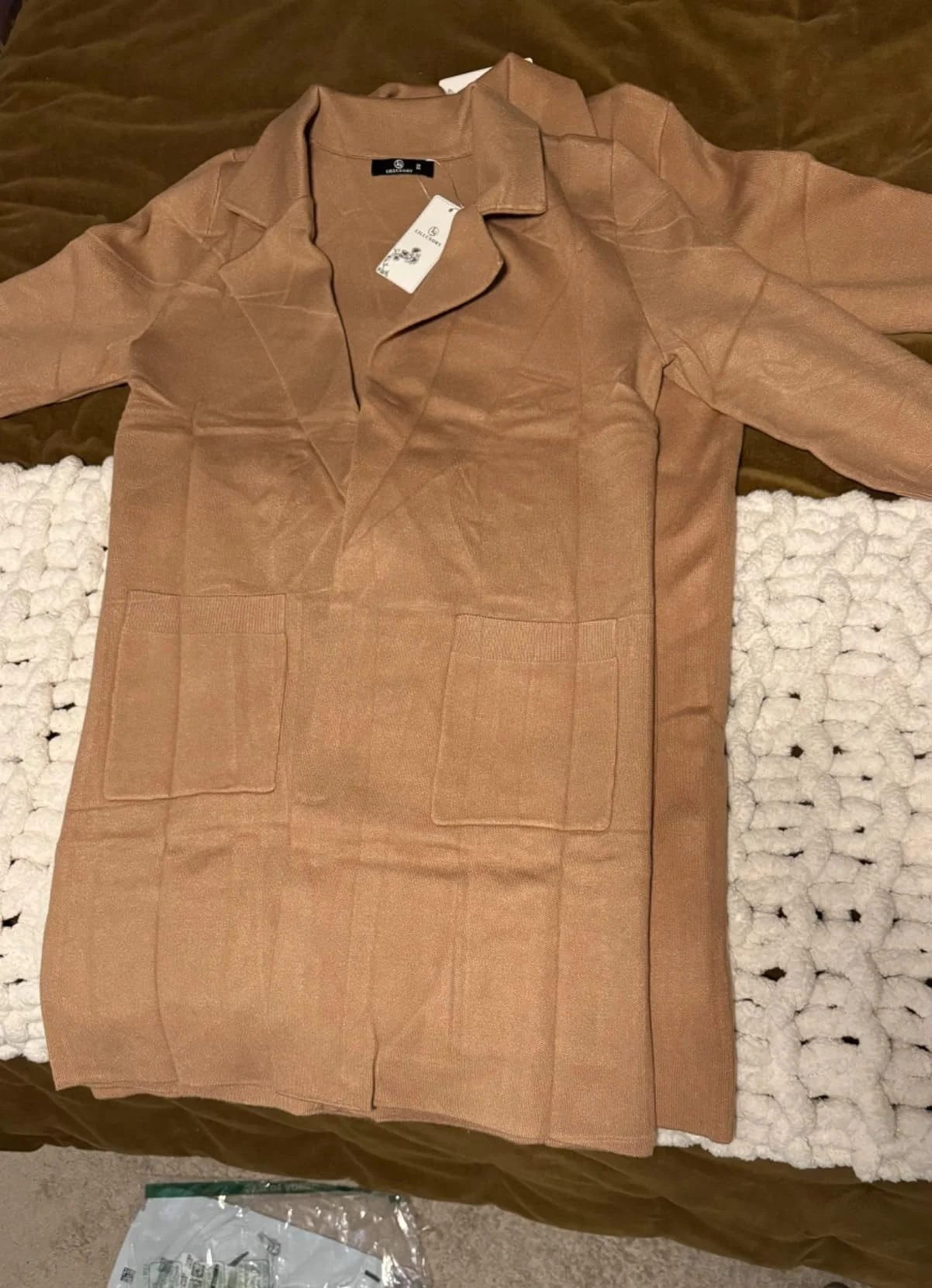
📦 Unpack It and Check the Surface Before Removing the Tags
As soon as the coat arrives, compare its color directly with the listing images and inspect the major panels for deep folds before wearing or removing anything. Hang it normally and see whether the creases begin to relax rather than assuming every packaging mark will disappear with steaming.
A temporary wrinkle from shipping is one thing. A fold that remains sharply visible after ordinary attempts to release it is another. If the coat still looks heavily compressed after unpacking, the packaging method has become part of the product experience—not something the buyer should simply ignore.
Color deserves the same scrutiny. Online screens can create small differences, but a shade marketed as caramel that arrives looking orange or rust is a much bigger mismatch. The reported case was described as far enough from the expected color to make the garment unusable for the buyer's intended look.
For online outerwear purchases, the first few minutes after opening the package are worth treating as a fit-and-finish check. If the color is substantially off or the folds remain stubbornly embedded, the garment may not deliver the appearance promised by the listing.
Checking Delivered Outerwear for Chemical Odors, Missing Parts, and Return Flaws
The condition of a coat when it arrives can tell you a lot before you ever wear it outside. A missing tag, unfamiliar items in the pockets, visible contamination, or a strong lingering odor should not be brushed aside as ordinary packaging quirks.
One reported case, anonymized as OFH-AUDIT-HVW2R, arrived with personal items left inside the pockets, including an unopened sanitary pad, makeup, and dirty gloves. Another case, OFH-AUDIT-ZPTD, reportedly contained a used lip balm and also arrived with visible spots and hair on the garment. A separate report involving OFH-AUDIT-NJK described a pungent chemical odor that persisted even after a cold wash and was strong enough that the garment had to be aired outside.
👃 Open the Pockets and Smell the Coat Before Wearing It
Before removing the tags, check every pocket, inspect the lining and surface, and take a careful smell of the garment. Look for hair, stains, foreign objects, missing labels, or anything suggesting that the coat may have been handled or worn before reaching you.
The odor deserves particular attention. A strong smell that remains after ordinary airing or washing is very different from the faint packaging smell that can disappear shortly after opening. If you would not feel comfortable putting the coat directly against your clothes because of the smell, stop and document its condition first.
For new clothing, the supplied quality guidance also identifies OEKO-TEX certification as a useful indicator that the garment has been checked for harmful dyes or finishes.
None of these signs alone proves why a particular item arrived in that condition. But when several appear together—especially missing tags, personal items, contamination, and a persistent odor—the safest response is to photograph everything before washing or wearing the coat.
A new outerwear purchase should arrive looking and smelling like a new garment. When the delivered condition raises obvious questions about its history, treating those questions seriously can save you from turning a questionable return into a worn item you can no longer easily send back.
CONCLUSION
A careful trench coat purchase starts with more than the size chart and product photos. Check the fabric composition so claims such as "wool blend" have some real meaning. If rain protection matters, test how the outer fabric handles a few drops rather than assuming a marketing label tells the whole story.
Fit also deserves a practical test. Close the collar, let your arms hang naturally, and cross them across your chest. The coat should allow normal movement without forcing you to solve a poor cut by ordering several sizes larger. Then inspect the buttons, buttonholes, zipper, and high-contact fabric areas before the coat becomes part of your regular wardrobe.
Finally, treat delivery day as an inspection period. Check the color, wrinkles, pockets, labels, surface, and odor before removing tags or washing the garment. These habits cannot guarantee a perfect coat, but they can help you spot obvious problems while you still have a straightforward way to return it.
THE ULTIMATE BUYING VERDICT
| Verdict | Key Consideration | Recommendation |
|---|---|---|
| 🔴 Significant concerns | Water passes through the outer fabric, the coat has severe proportion or movement problems, hardware fails, or the delivered garment shows strong signs of poor condition | Be cautious about keeping the coat. Document the problem before wearing or washing it and consider returning it |
| 🟡 Acceptable with limitations | A coat may have minor packaging wrinkles, limited wool content, or fit characteristics that work only for certain wearers | Accept it only if the limitation matches your intended use and the garment still passes basic fit, fabric, and condition checks |
| 🟢 Meets long-term expectations | The fabric composition matches its claims, the outer layer resists moisture, proportions allow normal movement, closures feel secure, and the delivered coat arrives clean and well finished | Look for these qualities together rather than relying on appearance or the product title alone |