
A trench coat can look right on the hanger and still feel wrong the moment you put it on. For a petite shopper, the hem may fall too low and make the coat feel oversized. For someone with a fuller upper body, the chest and back may pull when reaching forward. Even when the body fits, the sleeves can end up too short or much too long.
The same problem can happen at the hem. A coat may flare outward instead of falling cleanly, or arrive much shorter than the product photos suggest. These issues show why choosing a women's trench coat is about more than finding the right size. Height, sleeve length, shoulder room, hem shape, and the way the coat moves with your body all matter.
How Standard Coat Lengths Can Overwhelm Petite Frames Under 5'2"
A coat can be perfectly wearable on a taller shopper and still look completely wrong on someone under 5'2". The problem is not simply whether the XS label matches your measurements; the coat's length and overall shape have to work with your height.
One shopper at 5'2" and 110 lb found that even an XS from case OFH-AUDIT-ZPTD still looked oversized and hung loosely rather than creating a clean petite fit. That kind of mismatch can make a standard-length coat visually dominate the person wearing it.
Then there is the opposite failure. OFH-AUDIT-CZ6G was described as dramatically shorter than expected, with one buyer calling it a "crop top coat" rather than the pea coat shown in the listing. The result is not a flattering petite version of the intended design; it is simply a coat whose length no longer matches the buyer's expectation.
That is why petite trench coat shopping should focus on the actual cut, not just the size number. A shorter coat can work well when its hem and shape have been deliberately scaled down, while a standard coat may need tailoring before the proportions feel right. The available fit guidance specifically cautions that trench coats can overwhelm frames below 5'2" unless the length is shortened.
🔎 Look at the Hem Before You Buy
Hold the coat against your body and check where the hem would actually land. If the lower half feels visually heavy or the coat extends far beyond where you expected, do not assume going down another size will fix it—the body may become tighter while the length stays wrong.
For shoppers under 5'2", a cropped trench coat or a deliberately shortened petite cut is often the safer starting point. The current feedback also shows why checking the stated garment length matters as much as checking the size chart. When the cut is not adjusted for height, the result can swing from an oversized, hanging shape to an unexpectedly cropped one, leaving neither version looking like the coat you thought you ordered.
Why Shoulder Room and Back Vents Matter for Arm Mobility and Layering
A trench coat can fit your chest perfectly and still leave you fighting the garment every time you move. The real fit test is what happens when you cross your arms, reach forward, or add a sweater underneath.
One shopper in case OFH-AUDIT-ZPTD, at 5'6" and 135 lb, reported that a Medium felt so restrictive through the chest and back that normal movement became difficult. Another coat in OFH-AUDIT-TST1 showed the opposite kind of proportion problem: the body felt too narrow while the sleeves ran unusually long, creating a shape that did not move or sit naturally. That matters because a women's trench coat is supposed to work over real clothes, not just look correct while your arms hang straight down. A coat that leaves enough room across the chest and upper back gives you space to layer without immediately turning ordinary movements into a tug-of-war.
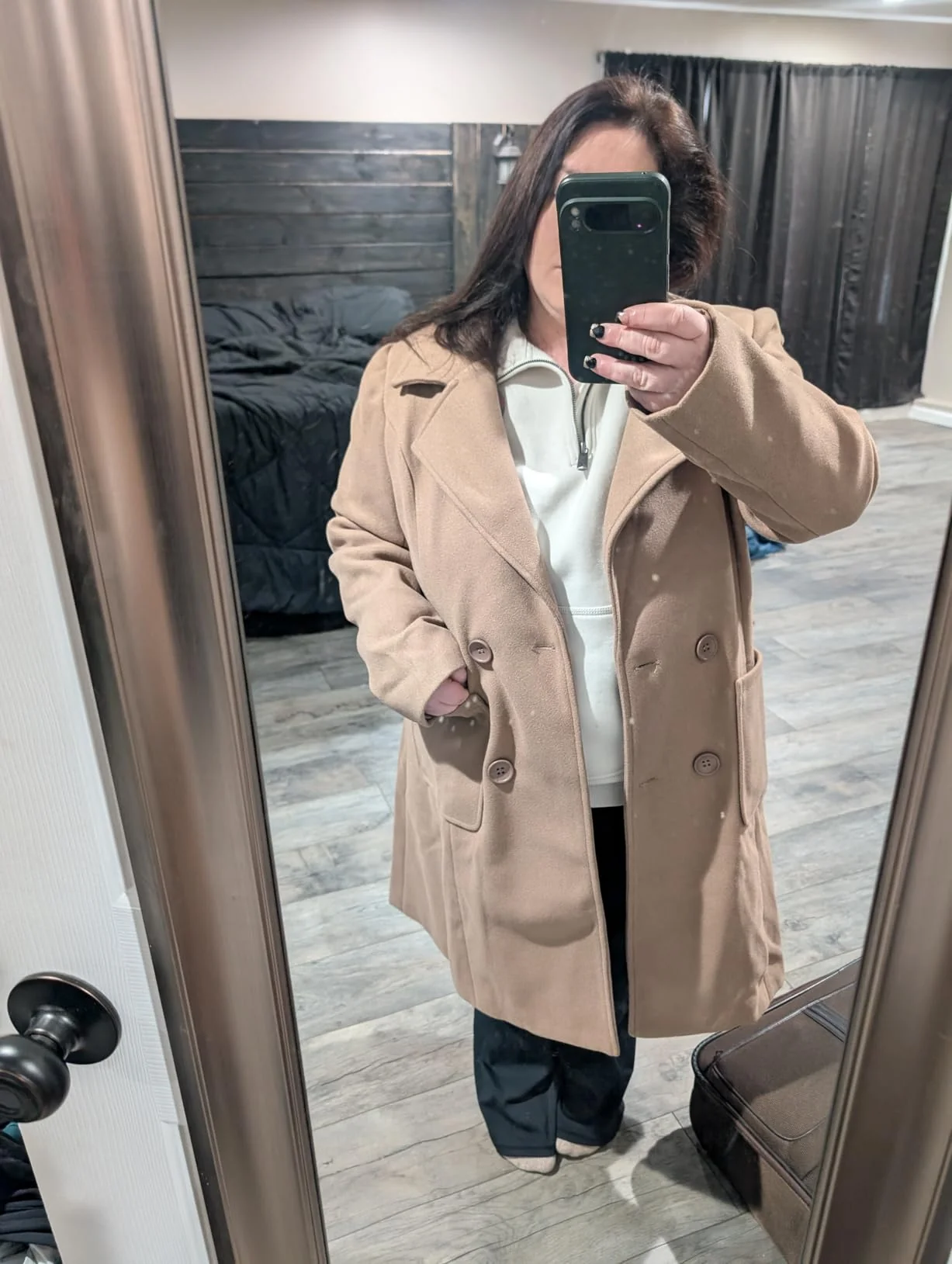
Traditional trench construction addresses this with room through the chest and back, while the storm flap and the folds beneath it help create additional freedom for movement. The point is simple: the coat should follow your movement instead of locking your upper body into one position.
🧥 Cross Your Arms Before You Commit
Put on the coat and cross both arms in front of your body. Then reach forward as though you were grabbing a steering wheel or pulling a bag toward you.
If the back pulls sharply, the shoulders feel trapped, or the front strains even though the chest measurement looked correct, do not assume sizing up is the only solution. A larger size may add unwanted length and bulk without fixing a poorly shaped cut.
The same check matters if you regularly wear knitwear underneath. A trench coat that only works over a thin shirt may become frustrating once a sweater enters the equation.
For shoppers comparing coats, shoulder freedom and back construction deserve as much attention as the size chart. The current cases show that a coat can technically match a wearer's measurements while still failing at the basic job of letting her move. If the first thing you notice after putting it on is that you cannot comfortably hug yourself, reach forward, or layer normally, the fit is already telling you something important.
What Causes Wide Hem Flaring and Cropped Silhouette Fit Issues
A coat can have the right size through the shoulders and still look completely wrong once you reach the hem. When the bottom suddenly kicks outward instead of falling cleanly, the silhouette can start looking more like a hoop than a coat.
That is exactly what one buyer encountered with OFH-AUDIT-VW2R. The hem reportedly flared outward into a persistent "hula hoop" shape that did not match the expected silhouette. The same product also had sizing feedback pointing in opposite directions, making it harder to predict how the finished shape would sit on the body.
Another case, OFH-AUDIT-CZ6G, shows the opposite problem: the coat arrived dramatically shorter than expected and was described as a "crop top coat" rather than the expected pea coat. For an outfit planned around a longer outer layer, that kind of unexpected proportion can make the garment unusable for an important occasion.
The practical lesson is that hem shape matters as much as stated coat length. A good long coat should fall downward rather than appearing to balloon away from the legs. If the lower edge sticks out sharply, folds awkwardly, or seems disconnected from the rest of the coat, the advertised length alone will not tell you whether the silhouette will work.
👀 Stand Back and Watch the Hem
Put the coat on and look at yourself from the side. Let your arms hang naturally, then take a few steps and turn around.
The bottom should follow the body rather than suddenly pushing outward. If it creates a visible ring around the legs, or if the coat looks dramatically shorter than its product photos suggest, treat that as a fit warning rather than assuming styling will fix it.
For petite shoppers especially, proportion becomes even more important. A long coat that hangs heavily can visually shorten the body, while an unexpectedly cropped one can throw off the balance you were trying to create. The safest choice is a hem that falls cleanly, matches the stated length, and keeps the overall silhouette intentional rather than accidentally flared.
Finding the Right Sleeve Length and Torso Balance Across Different Sizes
A coat can fit your body well and still look wrong because the sleeves belong to a different proportion. One of the easiest ways to spot a poor size progression is when changing sizes fixes the torso but creates a new sleeve problem.
That mismatch appears clearly in OFH-AUDIT-TST1, where the sleeves were reported as excessively long compared with the body. The coat was described as strangely made, with the sleeve length contributing to an overall shape that did not feel balanced.
The opposite problem shows up in OFH-AUDIT-9NJK. One shopper found that the Large had adequate sleeve length but an oversized body, while the Medium fit the body better but left the sleeves too short. Sizing up solved one problem only by creating another.
That is why a size chart should not be treated as a single chest measurement. A useful women's trench coat needs the torso and sleeves to work together. If the body becomes dramatically wider as the sleeve length changes, or the sleeve jumps from too short to excessively long between neighboring sizes, the grading may simply not match your proportions.
📏 Compare the Sleeves Before Choosing a Size
If you are between two sizes, check the listed sleeve length as well as the chest and overall coat measurements. Then compare those numbers with a coat you already own that fits your arms comfortably.
Pay particular attention to what happens when you move between sizes. If the smaller size fits your torso but leaves your wrists exposed, while the larger size gives you sleeves you can live with but turns the body into a loose shell, neither size is really solving the fit.
For shoppers with shorter or longer arms, this is also why customer measurements can be more useful than relying on the S/M/L label alone. The two cases above show that sleeve and body proportions can change in opposite directions across sizes, so check the sleeve measurement before assuming the next size up or down will fix everything.
CONCLUSION
A good trench coat should look balanced when you are standing still and remain comfortable when you move. Start by checking the actual garment length rather than assuming a smaller size will automatically make a standard coat more suitable for a petite frame. A shorter or deliberately petite cut may be a better choice when a full-length coat overwhelms your proportions.
Next, pay attention to the shoulders, chest, and upper back. Cross your arms, reach forward, and try the coat over the type of clothing you normally wear. If the back pulls or movement feels restricted, sizing up may create more problems instead of solving the original fit.
Finally, compare sleeve length with the coat body and inspect how the hem falls from the side. A clean hem, balanced sleeves, and enough room to move are better signs of a successful fit than the size label alone.
THE ULTIMATE BUYING VERDICT
| Verdict | Key Consideration | Recommendation |
|---|---|---|
| 🔴 Significant concerns | A coat may overwhelm a petite frame, restrict movement through the chest and back, flare widely at the hem, or create a major mismatch between sleeve and body length. | Avoid relying on the size label alone. Check garment length, sleeve measurements, shoulder freedom, and hem shape before buying. |
| 🟡 Acceptable with limitations | A standard-length coat can sometimes work when the overall proportions are close, but it may need careful sizing or tailoring to suit the wearer. | Consider it only when the measurements are close to your own proportions and the hem, sleeves, and upper body still allow comfortable movement. |
| 🟢 Meets long-term expectations | The coat has a balanced length, clean hem, sleeves that match the torso, and enough shoulder and back room for normal movement and layering. | Look for a cut that matches your height and proportions, and confirm the garment measurements before purchasing. |