
A shapewear garment can look secure when you first put it on, then start failing as soon as you sit, bend, wash it, or wear it for several hours. One garment may dig into the ribs when you sit down. Another may roll below the belly button. A third may feel tight around the upper stomach while leaving the lower belly unsupported. Even small details, such as sharp crotch hooks or rough leg trim, can make a garment impossible to keep wearing.
The reported problems in this article point to a common buying mistake: judging shapewear while standing still and focusing only on how tight it feels. Real use tells you much more. A careful check should include movement, skin-contact areas, coverage, fit through the torso, and what happens after washing. These checks can help separate shapewear that simply feels restrictive from shapewear that continues to provide useful support without creating new problems.
DEFECT AUDIT OVERVIEW
| Product Area | Common Problems | Why It Matters |
|---|---|---|
| Skin-contact areas | Strong odors, visible hairs, stains, sharp hooks, abrasive trim | These problems can make a garment uncomfortable or unsuitable for close, prolonged wear. |
| Support and fit | Boning that digs in, waistbands that roll, weak lower-belly coverage, poor plus-size proportions | A garment may feel tight without staying in place or supporting the areas you actually want shaped. |
| Fabric and durability | Excessive transparency, very thin material, loss of shape, pilling, or breakdown after washing | Coverage, shaping performance, and long-term value can all suffer when the fabric cannot hold up. |
Why Unwashed Shapewear and Chemical Residue Can Trigger Contact Rashes and Hives
Pulling on shapewear straight from the package should not leave you wondering whether you bought underwear or somebody's laundry-day mystery box. Yet one reported case tied a strong chemical smell to hives appearing within four days of wear, while another item arrived with a smell described as cat urine and visible hairs.
In the first case, OFH-AUDIT-9694 was reported with a strong odor, deodorant marks, dark underarm stains, embedded hair fibers, missing tags, and inside-out packaging. The wearer also reported hives within four days and attributed the reaction to the garment's treatment or dye.
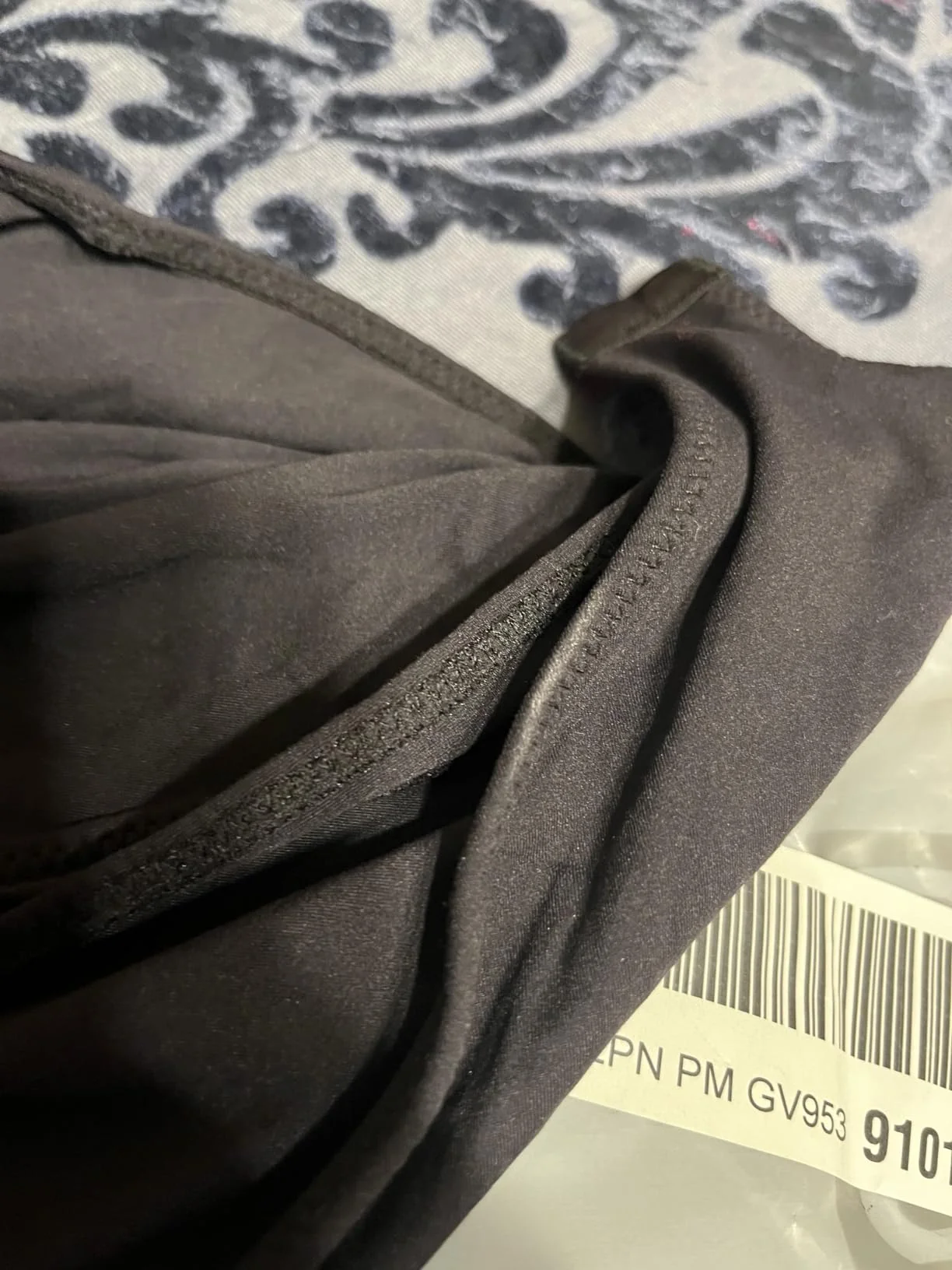
A separate product, OFH-AUDIT-33VW, was reported with an offensive cat-urine-like odor and foreign hairs on an item described as new. That combination matters because the problem is no longer simply whether the shapewear looks flattering—it raises a basic question about what has actually been sitting against your skin.
🫢 Smell the Garment Before You Wear It
Take the shapewear out of its packaging and smell the fabric, especially around the underarms, waistband, and inner panels. Then look for stains, hairs, missing tags, reversed packaging, or other signs that the garment may not have arrived in the condition you expected.
If several of those clues appear together, do not treat the odor as something you simply need to "wear off." The reported experience with OFH-AUDIT-9694 shows why an unexplained smell deserves attention when a garment is designed for prolonged, close contact with the body.
There is also a useful quality benchmark here. The supplied material identifies OEKO-TEX Standard 100 as a certification intended to screen textiles for substances such as formaldehyde, heavy metals, and certain dyes or finishes that can be problematic for sensitive skin. That does not prove that every uncertified garment will cause a rash, but it gives shoppers a concrete question to ask rather than relying on a vague "skin-friendly" label.
The bigger lesson is simple: clean-looking packaging is not the same thing as confidence in the garment's condition. When strong odor, visible contamination, and a reported skin reaction appear together, this particular product experience deserves caution rather than a quick assumption that the smell will disappear after a few wears.
What Causes Internal Plastic Boning to Poke and Dig In When Sitting Down
A shapewear panel can feel manageable while you're standing and become a completely different problem the moment you sit. One reported case involved hard internal boning pushing through the garment and creating sharp pain around the ribs and abdomen, with the wearer discarding it within hours rather than attempting to tolerate it.
That is the kind of failure that changes the buying question. You are no longer asking whether shapewear gives enough tummy control; you are asking whether its support can move with your body instead of fighting it.
The clearest example is OFH-AUDIT-Z7W5. The reported experience involved plastic boning that caused sharp, stabbing pain while sitting, severe enough to make the garment unusable within hours. Another case, OFH-AUDIT-33VW, described hard pieces and fastening components becoming painful during pulling and dressing.
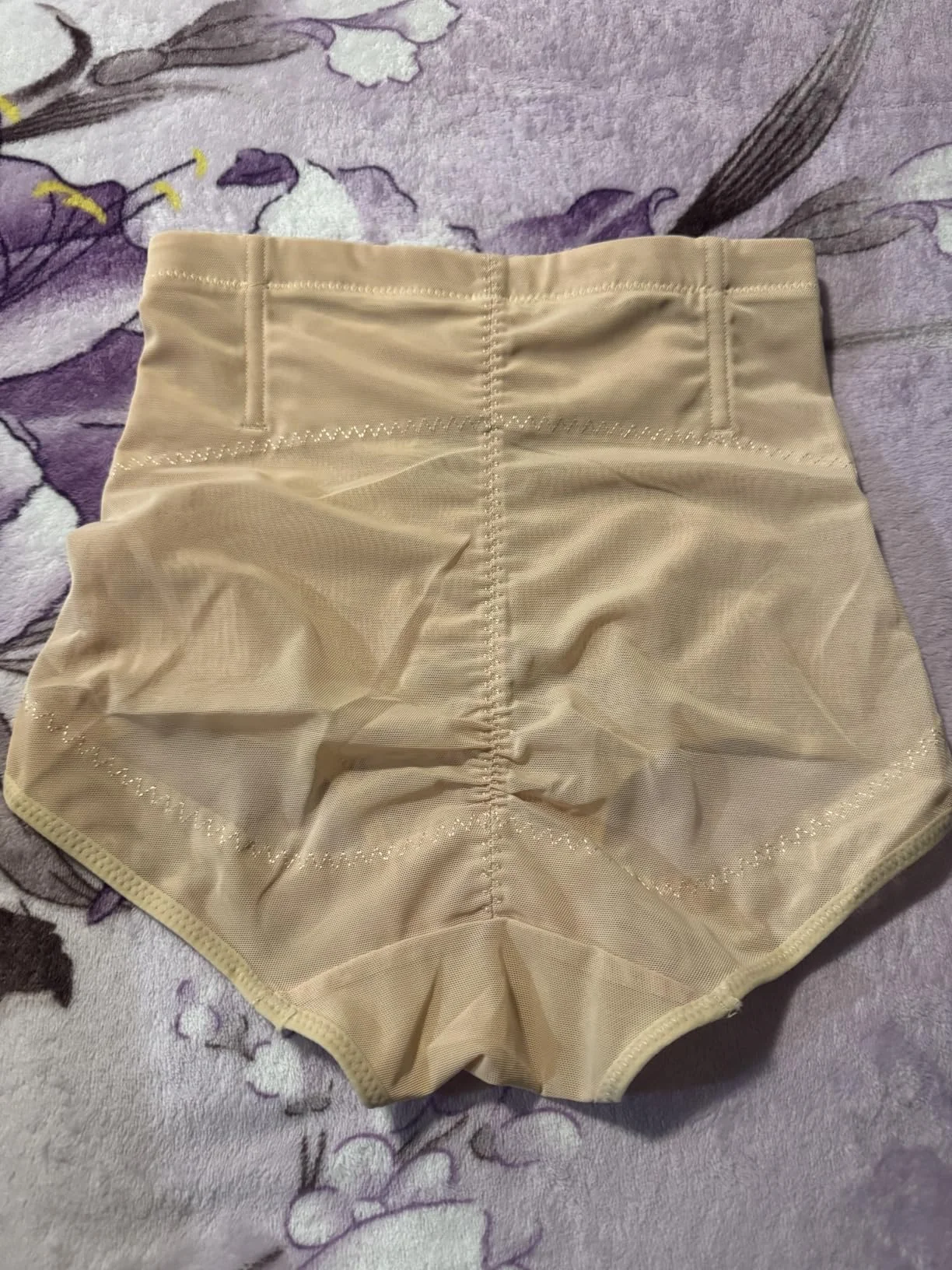
🪑 Sit Down Before You Trust the Boning
If you already own a boned garment, put it on normally, then sit in your usual chair for a few minutes. Pay attention to whether any internal strip suddenly becomes a concentrated pressure point around your ribs, stomach, hips, or back.
A support piece that feels fine upright but digs in when your torso bends is not adapting well to ordinary movement. Sitting changes the shape of the body and the angle of the garment, so a rigid strip can become much more noticeable than it was while standing.
This is where the construction approach matters. The supplied quality reference describes 4-way stretch Lycra Xtra Life as a way to create support through fabric that stretches and rebounds with the body, with different areas providing different levels of pressure. In other words, the garment can help hold its shape without depending entirely on a hard strip pressing against you.
That does not mean every garment containing plastic boning is automatically a bad choice. But when the boning itself becomes the source of sharp pain during an ordinary seated position, the promised "extra support" starts looking less useful.
For shoppers comparing shapewear, comfort should be judged in motion, not just in front of a mirror. The reported experience with OFH-AUDIT-Z7W5 is a good reminder that a garment can look structured and supportive while becoming painfully rigid once real life begins.
How to Tell if a High-Waisted Band Will Roll Down After Five Minutes of Sitting
A high-waisted shapewear band can look perfectly secure when you first pull it into place. Five minutes of sitting, walking, or bending can tell a very different story: the top edge starts folding downward, slides below the belly button, and leaves the stomach looking more segmented instead of smoother.
That is exactly what happened in the reported experience behind OFH-AUDIT-XGPD. The garment lacked a firm control band and repeatedly slipped downward, while OFH-AUDIT-MYZY was reported to roll even while standing. Once the waistband starts folding, the garment is no longer distributing its pressure where you intended.
🪑 Sit, Stand, Then Feel the Top Edge
Put the shapewear on and sit in your normal chair for several minutes. Stand back up, bend slightly, and run your fingers along the upper edge; if you can feel a thick fold forming or the band has migrated noticeably downward, the waistband is already losing its position during ordinary movement.
The supplied quality reference points to a different construction approach: a dense seamless knit with more than 180 stitches per inch and PTT fibers designed to recover their shape after repeated stretching. The important consumer takeaway is not the number itself, but whether the waistband keeps returning to its original shape instead of staying folded.
The contrast is easy to understand. A soft band without enough support at the top can simply follow the path of least resistance as your stomach bends and moves. Once it folds over itself, the pressure becomes concentrated into a narrower strip, which can create the familiar muffin-top effect the garment was supposed to smooth.
That makes roll-down resistance more than a comfort detail. A waistband that cannot stay upright cannot reliably perform its shaping job. The reported failures of OFH-AUDIT-XGPD and OFH-AUDIT-MYZY are good reasons to judge a high-waisted garment after sitting and moving—not just after pulling it on in front of a mirror.
Why Some Compression Garments Smooth the Ribcage While Leaving Lower Belly Support Empty
A compression garment can make the area above your belly button feel tightly held while leaving the lower stomach almost untouched. That creates an especially frustrating mismatch for anyone with an apron belly: the part you wanted covered remains unsupported while the upper section gets squeezed.
The reported experience with OFH-AUDIT-Z7W5 shows this problem clearly. Its compression was concentrated above the belly button, while the lower abdomen received little meaningful support. With OFH-AUDIT-33VW, reviewers also reported that the cross-belly straps shown in the product imagery were missing.
🫳 Feel Where the Pressure Actually Ends
Put the garment on and sit down normally. Run your hand from the ribs toward the lower abdomen and notice where the garment stops feeling supportive; if the pressure suddenly disappears below the belly button, you may have found the exact area the garment is failing to address.
That distinction matters because "tight" does not automatically mean "supportive." A garment can squeeze one section of the stomach while leaving another section loose, producing an uncomfortable result without delivering the smoother shape you expected.
The supplied reference describes graduated pressure as a better way to distribute support, with stronger pressure through areas that need more control rather than treating the entire torso as one flat zone. The important point for shoppers is simple: support needs to reach the area you actually want shaped.
The missing cross-belly straps reported for OFH-AUDIT-33VW make the same issue visible from another angle. If a product is pictured with an element that appears intended to hold the abdomen in place, but the delivered garment does not include it, the fit can behave very differently from what the product page suggests.
So when evaluating tummy-control shapewear, do not judge it only by how firmly it grips your ribs. Trace the support all the way down to the lower belly. The experiences tied to OFH-AUDIT-Z7W5 and OFH-AUDIT-33VW show why a garment can feel extremely tight and still leave the area that matters most without enough coverage.
Common Crotch Closure Problems: From Exposed Metal Hooks to Leg Opening Blisters
The bottom of a shapewear bodysuit has one job that should not require bravery: stay closed without poking or scraping you. Yet two reported failures show how small hardware and trim choices can turn an otherwise wearable garment into something you stop using almost immediately.
With OFH-AUDIT-89H4, reviewers described pointed metal hooks at the crotch that scratched and dug into sensitive areas. Another reported garment, OFH-AUDIT-MYZY, arrived with silicone trim around the leg openings that caused circular blisters during first use.
That makes the closure worth examining before you commit to an all-day wear session. A hook that looks harmless when the garment is flat can become a concentrated pressure point once you sit, walk, or bend.
🔎 Turn the Closure Inside Out First
Before wearing a bodysuit, open the crotch closure and run a finger gently along the hardware and surrounding edge. Do not wear it if a sharp point catches your skin or the trim feels abrasive rather than smooth.
The same goes for the leg openings. Check whether the grip material sits smoothly against the edge or creates a narrow ridge that could repeatedly rub the inner thigh. The reported experience behind OFH-AUDIT-MYZY shows why this is not merely a cosmetic detail: the first-use result was a ring-shaped blister where the trim contacted the skin.
A better design approach is to keep skin-contact areas smooth and avoid leaving exposed sharp hardware where the garment repeatedly moves against the body. The supplied quality reference describes flat, laser-cut edges and lower-irritation silicone as alternatives to uncovered sharp metal contact points.
The takeaway is not that every crotch hook or silicone grip is inherently problematic. It is that the closure and leg opening deserve the same scrutiny as the fabric itself. The experiences tied to OFH-AUDIT-89H4 and OFH-AUDIT-MYZY show how a tiny component can become the reason an entire shapewear piece gets abandoned.
How Fabric Thickness and Denier Affect Opacity and Actual Compression Levels
A shapewear garment can feel soft and almost weightless while doing surprisingly little to smooth or cover the body. That trade-off becomes obvious when the fabric is so thin that skin and underwear show through, yet the garment is still marketed as providing meaningful shaping.
One reported bodysuit, OFH-AUDIT-2H86, arrived with fabric transparent enough to reveal nipples through the garment, along with an off-white appearance that did not match expectations. Another case, OFH-AUDIT-9H4, described material so thin and fragile that a finger could easily poke through it.
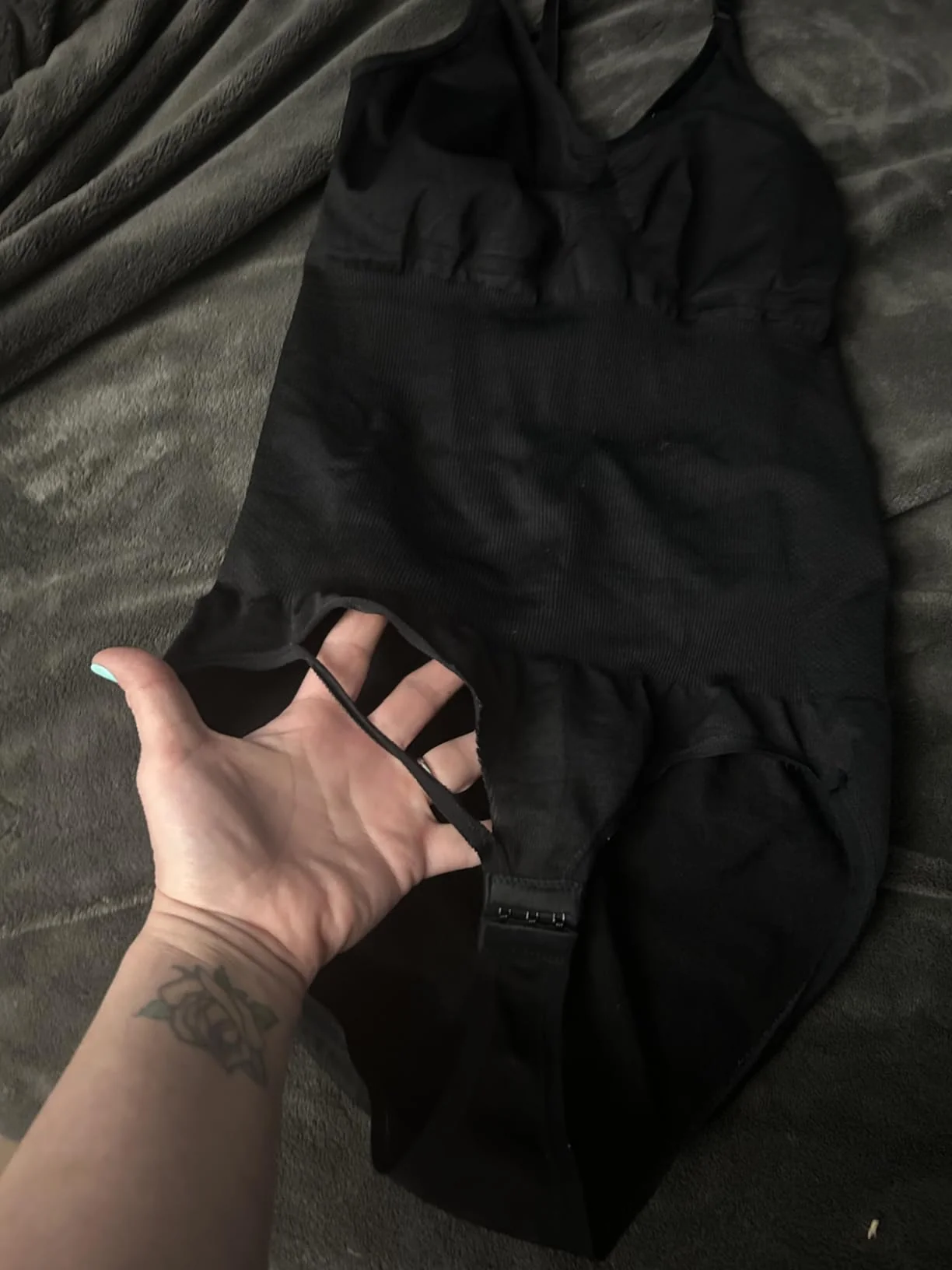
🫰 Stretch the Fabric Between Your Fingers
Before wearing a thin shapewear piece outside the house, gently stretch a small section between your fingers and hold it against a light background. If it becomes dramatically more transparent with only mild stretching, do not assume the garment will suddenly become opaque once worn.
Thickness also affects what you can realistically expect from the garment. The supplied material describes stronger shaping garments as using heavier 280-denier yarn with at least 20% Lycra-type stretch fiber. The point for shoppers is straightforward: a fabric that feels more like sheer hosiery may not deliver the same level of hold as a denser shaping fabric.
But opacity and shaping are not identical measurements. A thicker fabric is not automatically better, and a high denier number by itself does not prove that a garment will compress effectively. What matters is whether the finished garment actually provides the coverage and support promised on the product page.
That distinction is important when a seller uses phrases such as "barely there" or "lightweight shaping." If the material becomes see-through under normal tension and reviewers report little or no shaping effect, the problem is not simply that the garment feels thin—it may be failing two basic expectations at once: coverage and control.
The reported experiences behind OFH-AUDIT-2H86 and OFH-AUDIT-9H4 are therefore useful warning signs. Before trusting a lightweight shapewear claim, check how the fabric behaves when stretched, rather than judging its quality from how soft it feels straight out of the package.
Signs a Plus-Size Garment Was Scaled Up Improperly Instead of Proportioned for Curves
A plus-size garment should give your body room in the places that actually need room. When a pattern is simply enlarged without properly accounting for the relationship between the waist, hips, and torso, the result can feel less like shaping and more like being squeezed into a garment that never understood your proportions.
The reported experience behind OFH-AUDIT-6RQ is a good example. A wearer with a 20-inch torso reported that the garment left part of the lower stomach exposed, provided little support even when tightened fully, and arrived with a torn strap seam. Another case, OFH-AUDIT-MYZY, involved a wearer who still could not fasten the garment in a 3XL size.
🧍 Sit Down and Check the Gaps
Put the garment on and sit normally. Look at the lower stomach, waist, back, and under-bust area; if one section is digging in while another section is left exposed or unsupported, the problem may be the shape of the garment rather than simply choosing a larger size.
The supplied reference describes inclusive shapewear as using pattern drafting that accounts for different waist-to-hip proportions instead of merely scaling an existing smaller pattern upward. That distinction matters because curves do not grow in identical proportions from one size to the next.
The practical clue is therefore not just "Does the label say 3XL?" Look at where the garment runs out of length, where it creates concentrated pressure, and whether the closures can actually meet. OFH-AUDIT-6RQ shows how a garment can technically carry a larger size label while still failing to accommodate a longer torso.
A good plus-size fit should distribute its shaping across the body rather than forcing one area to absorb all the pressure. The experiences reported for OFH-AUDIT-6RQ and OFH-AUDIT-MYZY make that distinction worth checking before assuming that moving up another size will solve the problem.
Why Elastic Fibers Lose Compression and Shape After Just One Washing Cycle
A shapewear garment should not become a different garment after its first wash. Yet one reported case describes the material falling apart after a single wash, while another lost its shape and developed heavy pilling around the edges.
The clearest failure is OFH-AUDIT-Z7W5. The garment reportedly disintegrated after one washing cycle, making it impossible to rely on for a second wear. With OFH-AUDIT-9694, the garment lost its original shape after washing and developed substantial lint buildup along the edges.
🧺 Look at the Seams After the First Wash
After washing a shapewear garment, compare it with how it looked before laundering. Check the waistband, leg openings, seams, and areas that are supposed to sit firmly against the body; if those sections have visibly loosened, curled, or started shedding fibers, the garment has already lost part of what made it useful.
The supplied reference explains that heat and strong agitation can damage elastic fibers and reduce their ability to recover. That gives shoppers a practical reason to follow the garment's care instructions rather than treating shapewear like an ordinary T-shirt.
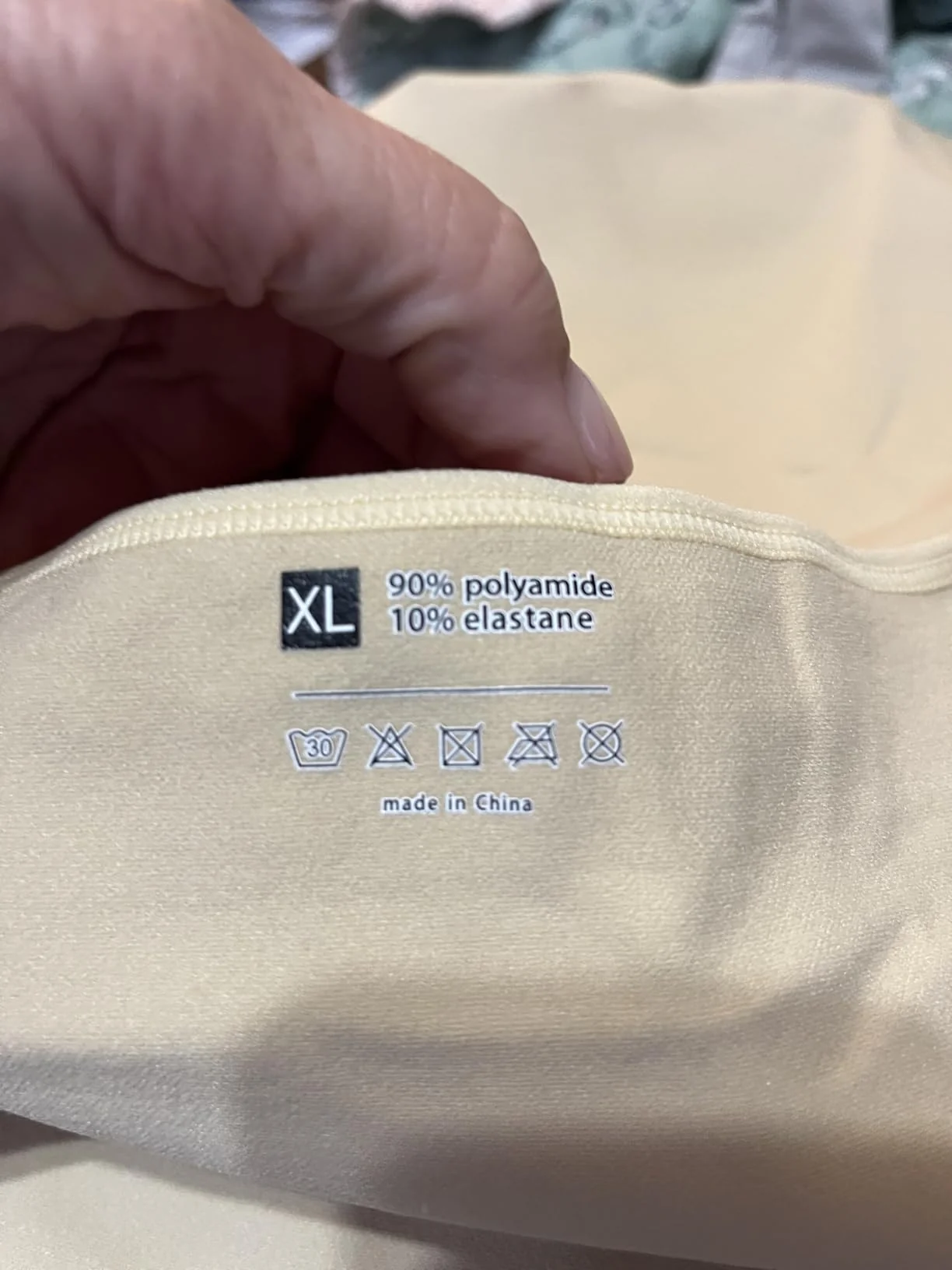
But care alone cannot explain every failure. A garment that loses its shape immediately or begins coming apart after one wash raises a separate durability question. The reported experience with OFH-AUDIT-Z7W5 is particularly difficult to overlook because the garment reportedly failed after its first laundering rather than gradually wearing out over time.
For shoppers comparing supposedly long-lasting shapewear, look for clear durability claims rather than assuming a high price guarantees them. The supplied reference points to fabrics tested for 50-plus wash cycles with less than 5% elongation as one example of a stronger durability benchmark, but that specification should be treated as a claim to verify rather than proof that every garment using the same type of fiber will perform identically.
A garment that cannot survive its first wash has a very short value proposition. The experiences tied to OFH-AUDIT-Z7W5 and OFH-AUDIT-9694 are a reminder that shape retention needs to survive laundering, not just the first try-on.
CONCLUSION
The safest way to judge shapewear is to test the parts that are easiest to overlook. Sit down instead of checking the garment only while standing. Bend and move to see whether boning or closures become painful. Feel where the compression actually ends, especially around the lower belly. Check the top edge after sitting to see whether it stays in place. For plus-size garments, look for gaps, excess pressure, short torso length, or closures that cannot meet rather than assuming a larger size will solve every problem.
Fabric deserves the same attention. Stretch it gently to check how transparent it becomes, and inspect the seams and edges after washing. Strong odor, visible contamination, sharp hardware, or a garment that loses its shape after one wash are not details worth ignoring.
The goal is not to find the tightest garment. It is to find one that stays where it should, supports the areas you need, remains comfortable during normal movement, and continues working after laundering.
THE ULTIMATE BUYING VERDICT
| Verdict | Key Consideration | Recommendation |
|---|---|---|
| 🔴 Significant concerns | Shapewear that causes sharp pain, rolls down, leaves important areas unsupported, has exposed or abrasive components, becomes excessively transparent, or falls apart after washing | Avoid garments showing these failures, especially when the problem appears during normal sitting, movement, or the first wash. |
| 🟡 Acceptable with limitations | A garment may provide useful shaping while having limitations such as some rigidity, lighter coverage, or construction features that require careful fit and movement checks | Consider it only when the limitation matches your needs and does not create pain, major gaps, loss of position, or poor coverage. |
| 🟢 Meets long-term expectations | Support stays in place during movement, pressure reaches the intended areas, skin-contact edges remain comfortable, fabric provides suitable coverage, and shape survives laundering | Look for shapewear that combines stable support, appropriate coverage, a proportionate fit, comfortable finishing, and reliable shape retention. |