A shapewear piece can feel very tight when you first put it on and still fail to smooth the area you actually care about. The upper stomach may feel squeezed while the lower belly remains unsupported. A high-waisted garment may also look secure in the mirror, then roll down as soon as you sit or bend.
Comfort can fail in a different way. Hard support strips may feel helpful while standing but press painfully into the ribs or stomach during a long day. Even a garment with strong tummy control can become frustrating if it takes too much effort to put on or makes normal breathing and movement feel restricted.
The better approach is to judge shapewear by where it supports, how it moves with you, and whether it stays in place. The consumer evidence discussed in this article shows why overall tightness is a poor substitute for balanced coverage and practical comfort.
Best Tummy Control Shapewear That Stays Up Without Rolling Down
A high-waisted shapewear piece can look perfect in the product photo and still become a constant tug-of-war once you start walking, sitting, or bending. The real failure is obvious when the waistband slides below the waist, folds under itself, and piles beneath the ribs, leaving the stomach less supported instead of smoother.
One anonymized consumer evidence case, OFH-AUDIT-VGPD, illustrates the problem clearly: the garment had no control top band, and reviewers reported that it slipped downward and rolled during wear. It also offered insufficient tummy control, so the lower edge could end up emphasizing the very folds the wearer was trying to smooth.
🧵 Pull the Waistband Up, Then Move
Before buying, look at the waist opening rather than judging compression from how tight the fabric feels. A waistband with no clear way to stay anchored can simply collapse downward once your body starts moving; buying a smaller size is not a reliable fix if the basic fit is wrong.
That is why waistband design matters as much as compression. The supplied material describes tummy-control shapewear as relying on elastic fibers that stretch around the abdomen and rebound to maintain pressure, with a seamless knit using 180+ stitches per inch and zone-specific support intended to resist waistband roll-down.
In practical terms, you want the top edge to stay broad, secure, and evenly placed around the waist, rather than depending on extreme tightness to keep it there. If the garment immediately bunches when you sit or walk, more compression can simply mean more fabric fighting its way downward.
The takeaway is simple: "high waist" on the label does not automatically mean high-waist stability. Recurring buyer feedback shows that missing anchoring features can turn a supposedly tummy-control garment into something that slips, rolls, and loses its intended purpose, so shoppers looking for all-day wear should pay close attention to how the upper edge is built before treating compression strength as the deciding factor.
How Lower Abdominal Panels Help Support and Smooth an Apron Belly
If your stomach carries more volume below the navel, a shapewear garment that only squeezes the upper abdomen can miss the area you actually want smoothed. The result can be an uncomfortable band of pressure around the stomach while the lower belly remains unsupported, creating a visible break under a fitted dress.
That mismatch appears in the anonymized consumer evidence case OFH-AUDIT-Z7W5. Review feedback describes compression stopping above the belly button, with little to no control across the lower abdomen. Another case, OFH-AUDIT-33VW, involved a garment advertised with cross-belly support that reviewers found did not deliver the expected tummy-control effect.
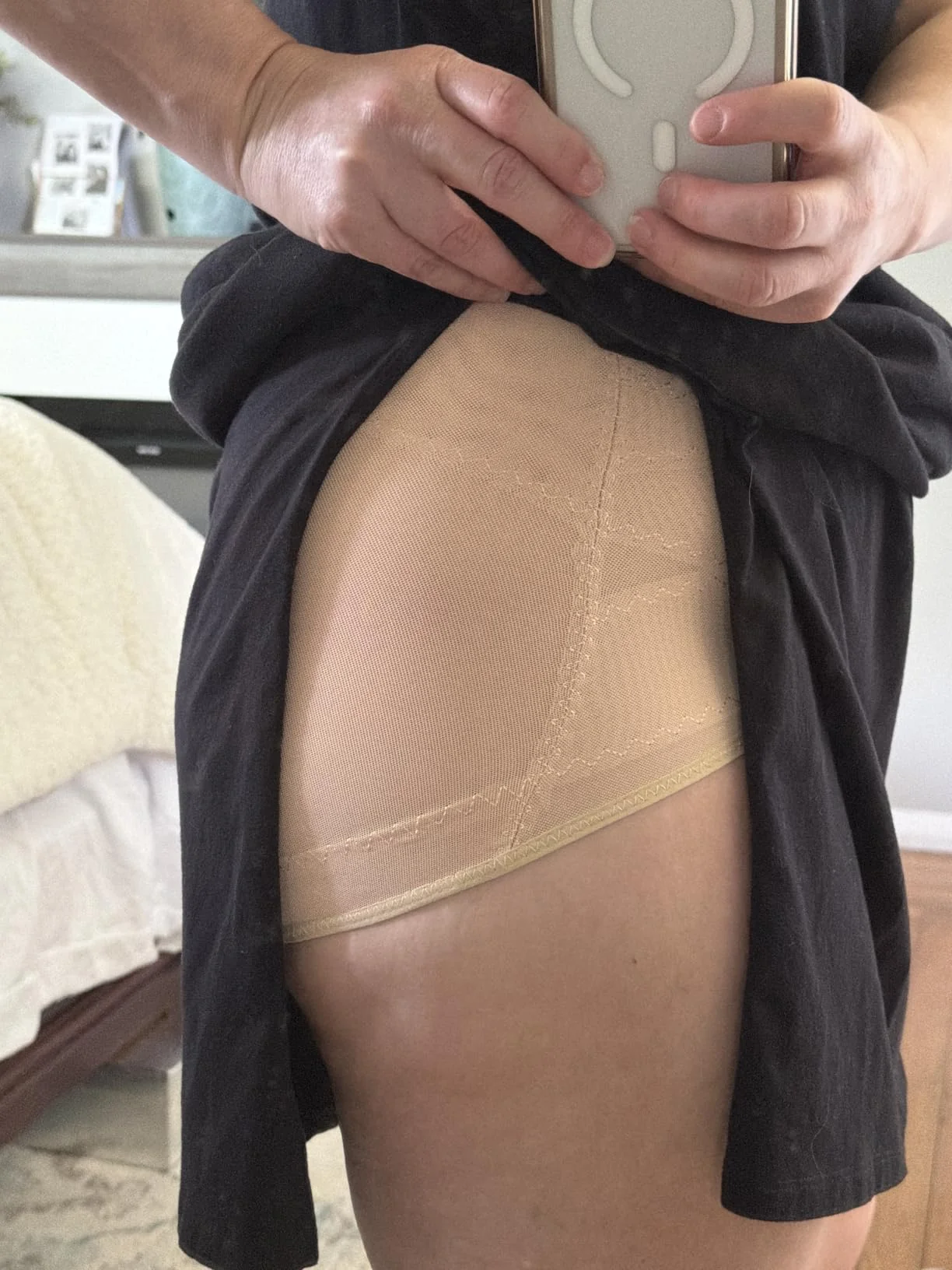
🫳 Feel Where the Lower Support Actually Ends
Put the garment on and run your hand from the navel toward the lower abdomen. The fabric should continue providing even support across the area that needs smoothing, rather than becoming noticeably softer or looser immediately below the belly button.
The supplied technical evidence describes tummy-control garments as using graduated pressure rather than concentrating all the squeeze in one location. For the lower-abdominal concerns described here, the supplied material specifies 20–30 mmHg of graduated pressure progressing upward from the pelvic area. The goal is to distribute support across the abdomen instead of creating one tight band higher up.
That distinction matters especially for an apron belly. If the lower abdominal area sits outside the garment's main supporting zone, tightening the upper section can make the top feel painfully restrictive without producing the smooth transition you expected underneath clothing.
So when comparing shapewear for an apron belly, don't judge the garment by how aggressively it squeezes your stomach at the top. Look for a design that actually reaches and supports the lower abdomen; the current examples show why more pressure in the wrong place is not the same thing as better tummy control.
Choosing Between Built-In Flexible Boning and High-Tension Seamless Knit for All-Day Sitting
A shapewear piece can feel perfectly smooth while you're standing and become a completely different garment the moment you sit down. For anyone wearing it through a workday, the real question is not how firm it feels upright, but whether the support stays comfortable when your torso bends.
The anonymized consumer evidence case OFH-AUDIT-Z7W5 is a useful warning. Reviewers described hard plastic boning that caused sharp, stabbing pain while sitting, severe enough that one buyer discarded the garment within hours.
🪑 Sit Before You Commit to the Fit
If you already own a garment with built-in supports, sit in your normal chair and bend forward for several seconds. Pay attention to whether a support strip stays flat against your body or turns into a concentrated pressure point around the ribs or lower abdomen.
The alternative described in the supplied evidence is a fabric-based approach: 70% high-tenacity nylon and 30% Lycra rather than relying on rigid plastic strips. The broader design logic is to spread support through the garment instead of asking a narrow, hard piece to hold the body in place.
That distinction becomes important during long periods of sitting. A firm piece can feel supportive when the torso is upright, yet become uncomfortable when the body changes position. A fabric garment can distribute that tension across a larger area, making the support feel less like a rigid object pressing into one spot.
This does not mean every garment with boning will cause discomfort, or that every seamless knit will provide enough control. The deciding factor is how the support behaves when you move, particularly if your shapewear will stay on through an office day, a long dinner, or another situation where sitting is unavoidable.
For all-day wear, the current evidence makes a strong case for prioritizing flexible, body-following support over hard pieces that can become pressure points in a seated position. The goal is tummy control you can actually keep wearing—not a garment that looks smooth for ten minutes and then gets sentenced to the trash after lunch.
Finding the Right Compression Level Without Restricting Breathing or Movement
The tightest shapewear is not automatically the most effective. If getting it on feels like wrestling with a stiff piece of plastic, and wearing it leaves you feeling squeezed rather than supported, the compression level is already working against you.
One anonymized consumer evidence case, OFH-AUDIT-33VW, shows how quickly that can become a practical problem. Reviewers described rigid construction that made the garment painful and difficult to pull on, with one buyer saying it hurt simply to get it into place. The same product was also criticized for feeling hot and lacking breathability.
🫁 Bend, Breathe, Then Pull
Before committing to a very firm garment, put it on and sit down, bend forward, and take several normal breaths. If the fabric fights every movement or creates one hard pressure point across your stomach, don't confuse that sensation with better control.
The opposite problem can be just as frustrating. OFH-AUDIT-VGPD was described as having fabric that felt too soft and low in tension, with inadequate tummy control and a waistband that slipped and rolled during wear.
That gives you a useful middle ground to look for: the garment should stretch enough to follow your body when you sit, stand, and move, while still recovering enough to maintain a steady fit. The supplied material specifically points to 20–30% PTT-based stretch fiber as an example of a fabric approach designed to retain its shape after repeated stretching.
In other words, good tummy control should feel like steady support, not a wrestling match. If a garment is painfully difficult to put on or makes ordinary movement uncomfortable, simply sizing down or choosing a firmer option is unlikely to solve the underlying problem. Recurring buyer feedback makes the better target clear: look for enough stretch to move naturally, enough recovery to stay in place, and compression you can realistically tolerate for the entire time you plan to wear it.
CONCLUSION
Choosing shapewear is less about finding the tightest garment and more about finding support in the right places. If your main concern is the lower belly, check that the garment actually covers and supports that area instead of concentrating pressure above the belly button.
For long periods of sitting, pay attention to what happens when the garment bends with your body. Hard support can become uncomfortable when it presses against the ribs or lower stomach, while a stretchy fabric-based design may allow more natural movement. This does not mean every seamless garment will work for everyone, but it gives you another useful feature to compare.
Fit should also be tested through ordinary movement. Breathe comfortably, sit down, bend forward, and check whether the waistband stays in position. If the garment rolls down, shifts freely, or requires excessive force to put on, simply choosing a smaller size may not fix the underlying problem.
THE ULTIMATE BUYING VERDICT
| Verdict | Key Consideration | Recommendation |
|---|---|---|
| 🔴 Significant concerns | Shapewear that leaves the lower belly unsupported, rolls down, uses uncomfortable rigid support, or is difficult to put on can create more frustration than useful shaping. | Be cautious with garments showing these problems, especially when the intended use involves sitting, bending, or wearing them for a full day. |
| 🟡 Acceptable with limitations | Some firm or boned designs may provide a smooth standing shape but can become uncomfortable during sitting or movement. | Consider them only if they remain comfortable during your normal movements and the support stays where you need it. |
| 🟢 Meets long-term expectations | Shapewear with coverage across the area being smoothed, enough stretch to allow normal movement, and a waistband that stays in place offers a more practical balance of support and comfort. | Look for designs that support the lower abdomen, move with the torso, and remain reasonably stable when you sit, bend, breathe, and walk. |