
You pull on winter leggings expecting to feel warm, step outside, and realize your legs still feel cold. Or you put on sheer-look tights that seemed polished in the package, only to find patchy color, loose threads, or holes after washing. These problems can make winter clothing frustrating because the issue is often visible only after the garment is stretched, worn, or washed.
The same concern appears with new fleece pants that arrive with a strong chemical smell or brushed fabrics that collect pet hair within minutes. Softness and thick-lining claims may sound convincing, but they do not always tell you how the garment will behave in daily use.
Before buying, look beyond words such as "fleece lined," "warm," or "soft." Check the actual lining, surface, color, seams, odor, and care requirements. These details can tell you much more about whether a winter garment will remain comfortable and presentable through regular wear.
Why Some Fleece-Lined Leggings Feel Cold Despite Thick Lining Claims
You pull on a pair of fleece lined leggings expecting winter comfort, only to discover that your legs still feel cold before you even leave the house. The problem is not always the weather; sometimes the "thick fleece" promised on the listing simply is not what arrives.
One particularly clear complaint cluster, anonymized as OFH-AUDIT-K353, describes leggings that were so thin and lacking in fleece that wearing two pairs still did not provide the expected warmth. The same product generated five separate complaints specifically questioning the claimed fleece lining, making this more than a single disappointed first impression.
Another reported case, anonymized as OFH-AUDIT-SZSC, was advertised as heavily lined but was described instead as having a very thin, non-plush inner layer. Some reviewers even noticed lining material escaping around the seams, which makes the "thick and fluffy" description particularly difficult to reconcile with what was actually in hand.
👀 Feel the Lining Before You Trust the Listing
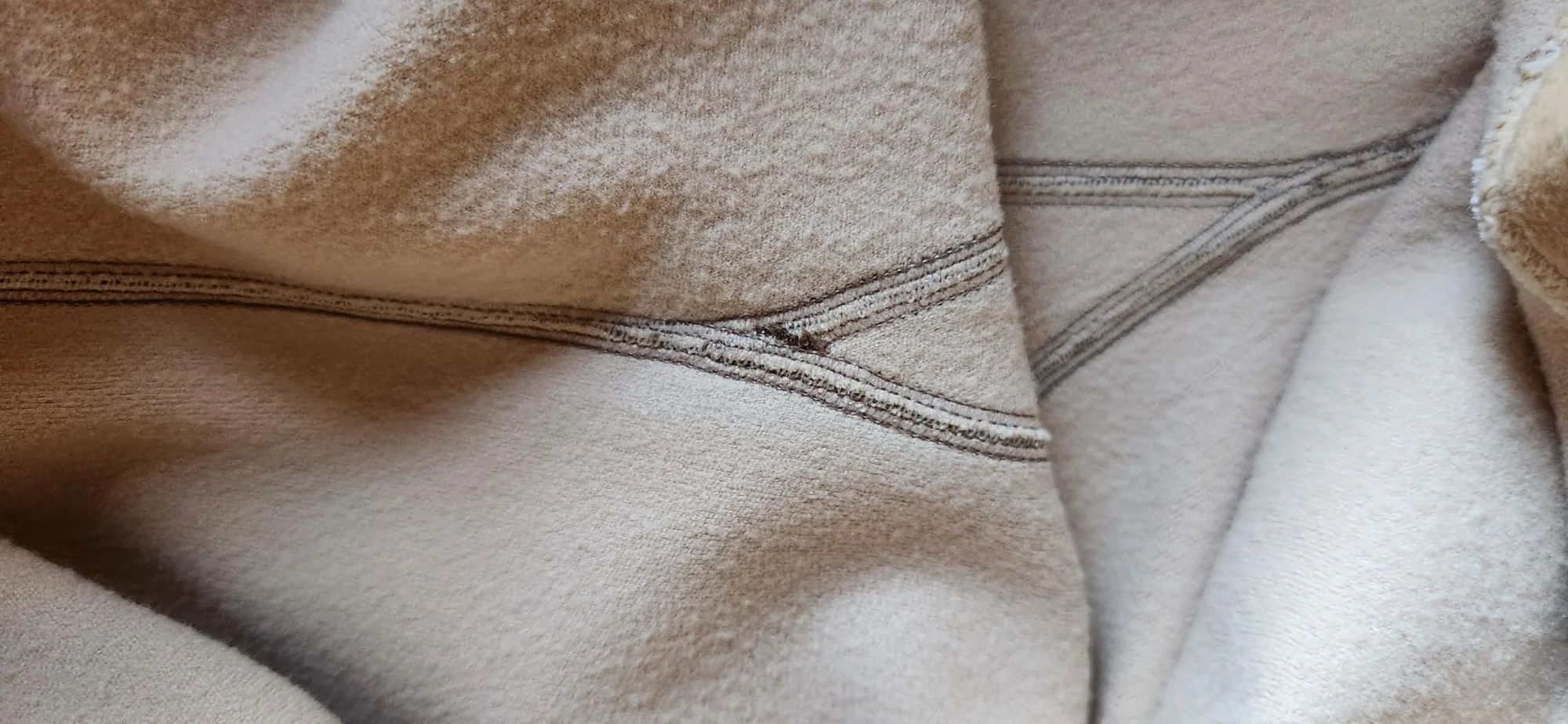
Turn the leggings inside out and run your fingers across the entire inner surface. A genuinely substantial fleece interior should feel consistently soft and full, rather than changing abruptly into nearly smooth fabric or exposing sparse brushing around seams.
That distinction matters because the supplied construction benchmark describes 180gsm brushed microfleece as the intended lining for warmth. The basic idea is simple: a fuller fleece layer holds pockets of warm air, while a thin brushed surface offers far less material between your skin and the cold.
There is also a practical maintenance catch: the same material guidance says heat can damage the fleece and encourage pilling, while tumble drying can cause shrinkage. Cold washing and laying the garment flat to dry are therefore important if the lining is going to retain its original feel.
The takeaway is straightforward: "fleece lined" is not enough by itself. When the lining is visibly sparse or barely fuzzy, the garment may struggle to deliver the warmth shoppers reasonably expect, so this particular feedback warrants caution before treating a thick-lining claim as proof of winter performance.
Uneven Shading and Snags: What to Check When Buying Sheer-Look Winter Tights
The appeal of sheer-look winter tights is simple: warmth underneath, bare-leg appearance on top. But when the color looks patchy after you put them on, the illusion falls apart fast—and so does the reason you bought them.
A reported pair, anonymized as OFH-AUDIT-DLVZ, arrived with a noticeably uneven appearance when worn. The color reportedly looked blotchy across the legs, and the same pair began unraveling after a single wear before developing holes after washing.
That is a very different problem from a minor shade variation. If one area looks darker while another looks noticeably lighter, the finished effect can resemble random patches rather than natural-looking skin. Another complaint described the material as resembling a cheap Halloween costume, reinforcing how quickly an inexpensive-looking surface can undermine the entire styling purpose.
🧐 Look at the Color Before You Step Outside
Put the tights on and check them under more than one light source. Look at the thighs, knees, calves, and ankles separately, because uneven areas may become much more obvious once the fabric is stretched over the body.
Then gently inspect the surface for loose threads or early pulls. If a single wear has already produced visible unraveling, the problem is no longer just cosmetic—the garment may be approaching the point where a small snag becomes a much larger hole.
The supplied material guidance points toward a two-layer construction paired with fibers intended to resist snagging and tearing. The practical reason is easy to understand: when the outer appearance and inner warmth are handled as separate layers, the garment has more room to maintain a consistent visual finish while remaining suitable for colder wear.
Care matters too. The reported DLVZ pair developed holes after washing, so a garment that looks acceptable straight out of the package may still disappoint quickly if its surface cannot withstand ordinary use and laundering.
For winter tights marketed as a bare-leg illusion, consistency is the whole point. If the color already breaks into obvious patches or the fabric begins shedding threads after one outing, the promised polished effect can disappear before the season has even started.
How to Remove Strong Packaging Odors From New Synthetic Fleece Pants
Opening a new pair of synthetic fleece pants should not feel like opening a bottle of industrial cleaner. Yet one reported pair, anonymized as OFH-AUDIT-SZSC, arrived with a strong, persistent chemical odor that remained even after repeated washing.
That changes how you should handle the garment. If the smell is still intense after several washes, simply wearing the pants against your skin and hoping the odor disappears is not a sensible workaround.
🧺 Air Them Out Before You Wear Them
Take the pants out of their packaging and let them air in a well-ventilated area before trying them on. If the odor remains strong after washing, do not treat repeated washing as proof that the garment is now acceptable—the reported case specifically describes the smell persisting through multiple washes.
There is also a useful certification detail to check when shopping. The supplied guidance identifies OEKO-TEX Standard 100 as a relevant benchmark and describes it as excluding substances such as formaldehyde, certain aromatic amines, and heavy-metal fixing agents from certified textiles.
That does not mean every garment carrying a "soft," "fleece," or "new" label has been held to the same standard. When a product arrives with an unusually strong odor, checking its certification information is more useful than assuming the smell is simply part of normal new-clothing packaging.
For a garment intended to sit close to the body, persistent odor deserves attention rather than normalization. The particular reported case presents enough uncertainty that returning the item is the more cautious choice if repeated washing and airing fail to resolve the problem.
Preventing Static Cling and Pet Hair Buildup on Brushed Winter Fabrics
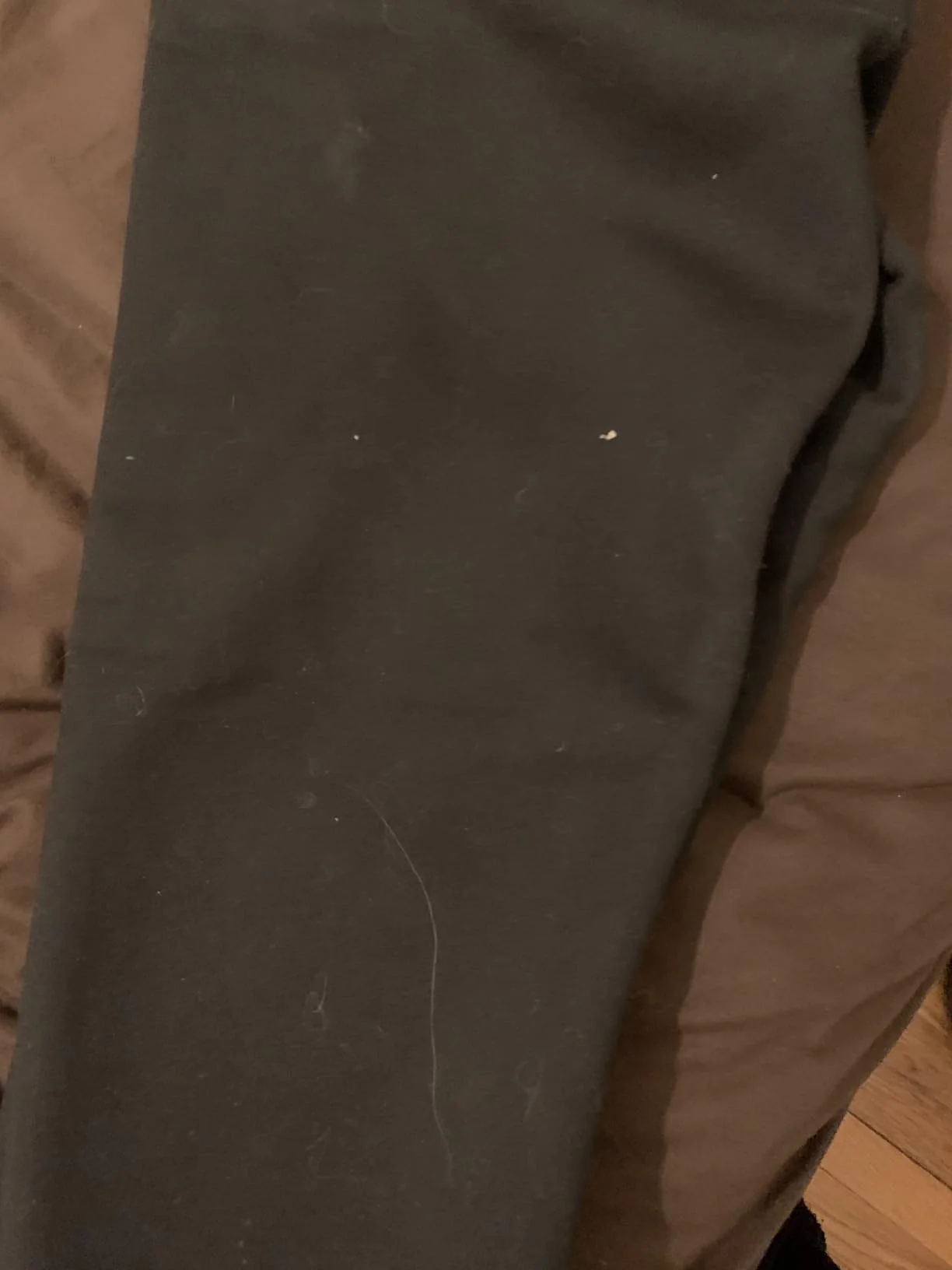
A brushed winter fabric can feel soft when you first pull it on, then become a pet-hair magnet within minutes. One reported pair, anonymized as OFH-AUDIT-SZSC, was described as collecting dog hair so quickly that it effectively became a lint roller you had to wear.
The same report also noted that the outer surface seemed prone to early fuzzing and deterioration, so the problem was not limited to having to brush off hair before leaving the house.
For anyone with pets, dark brushed fabrics can make this especially obvious. A few minutes around a dog can turn a freshly dressed outfit into a visibly fuzzy layer, while repeated surface wear may gradually make the fabric look older than its actual age.
🧤 Rub the Surface Before You Buy
Run your hand across the outside of the fabric, then lightly press a small amount of clean lint or loose pet hair against it. If the material grabs everything immediately and holds onto it, that is worth treating as a practical warning rather than assuming a lint brush will solve the problem forever.
The construction guidance supplied for this category points to a 92% polyester / 8% spandex fabric with an anti-static finish, alongside a durability benchmark of more than 300 wear cycles.
The useful distinction is not simply "polyester versus another fabric." What matters here is how the finished surface behaves during everyday wear. A brushed fabric that attracts hair aggressively and begins fuzzing quickly can become increasingly difficult to keep looking clean, particularly in homes with pets.
For pet owners, hair retention is part of everyday wearability. The reported experience with this particular case suggests that shoppers should pay attention to surface behavior, not just softness or warmth claims, and be cautious when a brushed fabric visibly grabs lint and hair almost immediately.
CONCLUSION
Winter clothing needs to work beyond the first try-on. A lining that looks thick in a product description should feel consistently full when you turn the garment inside out. Sheer-look tights should maintain an even appearance when stretched across the legs, while loose threads or early unraveling deserve attention before they become larger holes.
Strong packaging odors are another reason to slow down. Airing and washing may help, but a smell that remains intense after repeated washing should not simply be accepted as normal. For brushed fabrics, surface behavior matters too. If the material immediately grabs lint and pet hair or begins to fuzz quickly, keeping it looking clean may become an everyday chore.
The safest buying habit is to judge the garment by what you can actually inspect: lining thickness, surface consistency, stitching, odor, and expected care. These checks can reveal problems that a warm or luxurious product description may not show.
THE ULTIMATE BUYING VERDICT
| Verdict | Key Consideration | Recommendation |
|---|---|---|
| 🔴 Significant concerns | Thin or sparse fleece, uneven color, early unraveling, persistent strong odor, or a brushed surface that quickly collects hair and fuzzes | Be cautious with garments showing these problems, especially when the issue remains after basic care such as washing or airing |
| 🟡 Acceptable with limitations | A garment may provide some warmth or softness while still having surface, care, odor, or hair-retention limitations | Consider it only if those limitations fit your normal use and you are comfortable with the required care |
| 🟢 Meets long-term expectations | Consistent fleece coverage, even appearance, secure surface and seams, manageable odor, and a finish that does not aggressively retain hair | Look for garments whose actual construction and surface behavior support regular winter wear rather than relying only on listing claims |