
A jumpsuit can look perfect when you first put it on and still become a problem by the middle of the day. The fabric may stretch sheer across the thighs, the crotch may feel pulled too tight, the waist may bunch when you sit, or the knees may start to bag after a few hours.
These problems often do not show up during a quick fitting-room check. They appear when you walk, sit, bend, climb stairs, and wear the garment the way you normally would. That is why a good-looking jumpsuit is not always a good-fitting one.
Before buying, pay attention to how the fabric handles tension, how much room the torso gives you, whether the waist has real shape, and whether stretch fabric can return to its original form after movement.
Why Thin Plus-Size Jumpsuit Fabrics Stretch Sheer and Reveal Texture Under Tension
The problem often starts the moment a jumpsuit is asked to do what a jumpsuit is supposed to do: sit, bend, walk, and move with a real body inside it. Thin fabric may look smooth while standing still, then pull open across the hips, thighs, or seat and suddenly show every texture underneath.
One reported case, OFH-AUDIT-J8TD, makes that concern hard to dismiss. The jumpsuit was described as so thin that it showed cellulite, while the crotch seams reportedly started coming apart in under five hours of wear. Other feedback described holes appearing in the groin and leg areas within the first 12 hours.
That is not just an awkward mirror moment. Once the fabric is stretched across a fuller body, a weak, thin layer can stop behaving like coverage and start behaving like a filter. Every shift in weight can make the surface look more transparent, while the most stressed seams keep taking the punishment.
👀 Pull the Thigh Area Before You Commit
Hold the fabric between both hands and gently stretch it. Look through the material toward a window or light source. Then check whether the color turns noticeably lighter and whether the weave opens up.
Next, look closely at the crotch area. A single line of stitching doing all the work is a poor place to gamble. A better plus-size jumpsuit should have extra support where the legs and torso meet, rather than relying on one narrow seam to survive hours of walking and sitting.
Real size inclusion also means more than adding larger numbers to a size chart. Look for ranges such as XS–5X alongside signs that the garment was built to accommodate fuller proportions, with stronger fabric that stays covered when stretched and extra reinforcement at the crotch.
The broader lesson from OFH-AUDIT-J8TD is simple: plus-size clothing cannot be judged only while standing motionless. A jumpsuit that looks flattering for ten seconds in front of a mirror may tell a very different story after an afternoon of sitting, climbing stairs, and moving normally. In the feedback reviewed for this case, the combination of visible body texture and rapid crotch failure suggests that buyers who need dependable coverage and durability should examine the fabric and high-stress seams with extra care.
How Proper Inseam and Torso Proportions Prevent Discomfort on Taller and Curvier Frames
A jumpsuit can fit the waist, hips, and chest yet still become a walking source of misery if the vertical length is wrong. When the torso is too short, the garment gets pulled upward every time you stand, sit, or reach, leaving the crotch area doing work it was never built to handle.
One reported case, OFH-AUDIT-4437, captures the problem with unusual clarity. Buyers described wildly inconsistent sizing—an XXL feeling too small while a Medium felt too large—and one reviewer compared the too-short body length to "the thong of rompers." The complaint was not that the wearer had the wrong body. The jumpsuit simply did not leave enough room through the torso.
For taller, longer-torso, and curvier women, vertical space matters just as much as hip or waist measurements. A garment that has been enlarged mainly around the body without enough added length can create upward pulling, digging, and restricted movement.
📏 Sit Down and Reach Up Before Keeping It
Fasten the jumpsuit, sit for a few seconds, then stand and raise both arms. Pay attention to the crotch and lower torso. If the fabric snaps back downward with a hard pull, rides upward while seated, or feels tight before you have even started moving, the body length is probably too short.
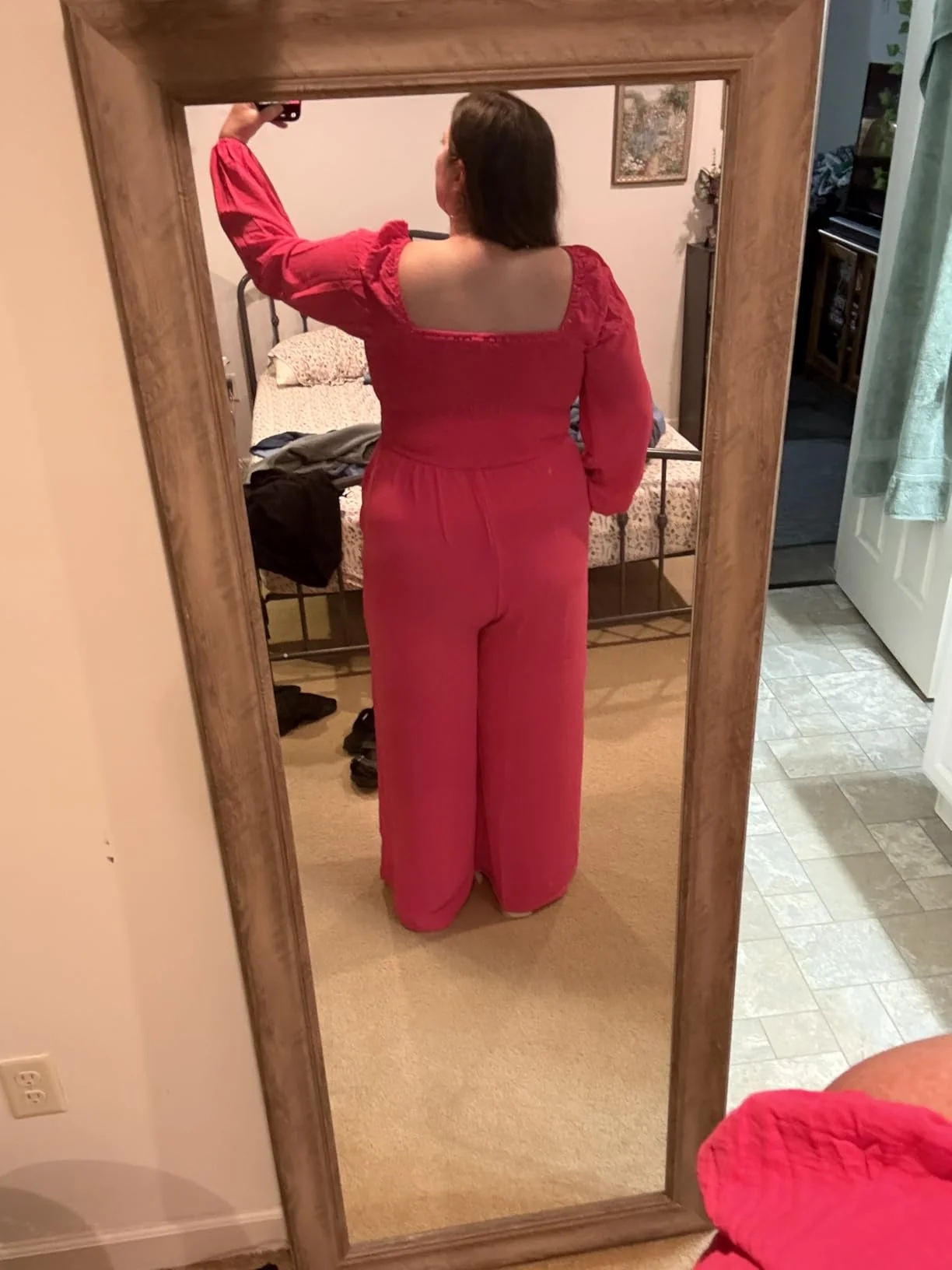
A better fit system does not treat every larger size as a simple wider copy of a smaller one. The vertical proportions should change too. More advanced fit development can use digital body models and movement simulation to reduce sizing errors, while long-torso or tall-specific patterns can place the crotch lower to give the wearer more usable space.
That distinction matters because inseam length alone cannot rescue a jumpsuit whose upper body is too short. The torso, rise, and leg proportions need to work together. A jumpsuit that fits a curvier frame should still let the wearer sit, bend, and walk without feeling like the garment is constantly trying to pull itself into a different size.
The complaints surrounding OFH-AUDIT-4437 show why "size up" is not a universal fix. When a larger size becomes baggy in one area but still pulls painfully through the torso, the problem is the pattern—not your body.
Drawstring Waistbands vs. Tailored Darts: Which Jumpsuit Cut Flattens the Midsection Better
A drawstring can adjust a waistline, but it cannot magically create structure where the pattern provides none. Pull it too tight, and the fabric gathers around the midsection. Leave it loose, and the jumpsuit may hang straight from the chest to the hips with the familiar "inflated barrel" effect.
That distinction showed up in feedback for OFH-AUDIT-4437, where fit problems included an unstable overall shape during wear. Another reported case, OFH-AUDIT-WHYTM, described the garment as having virtually no shape, leaving the wearer without meaningful definition through the body.
For women who want a smoother-looking midsection, especially when sitting, the better solution is usually shaping built into the cut rather than pressure added afterward. A drawstring changes where the fabric bunches. Tailored darts or a structured wide waistband can guide the fabric into a more intentional shape.
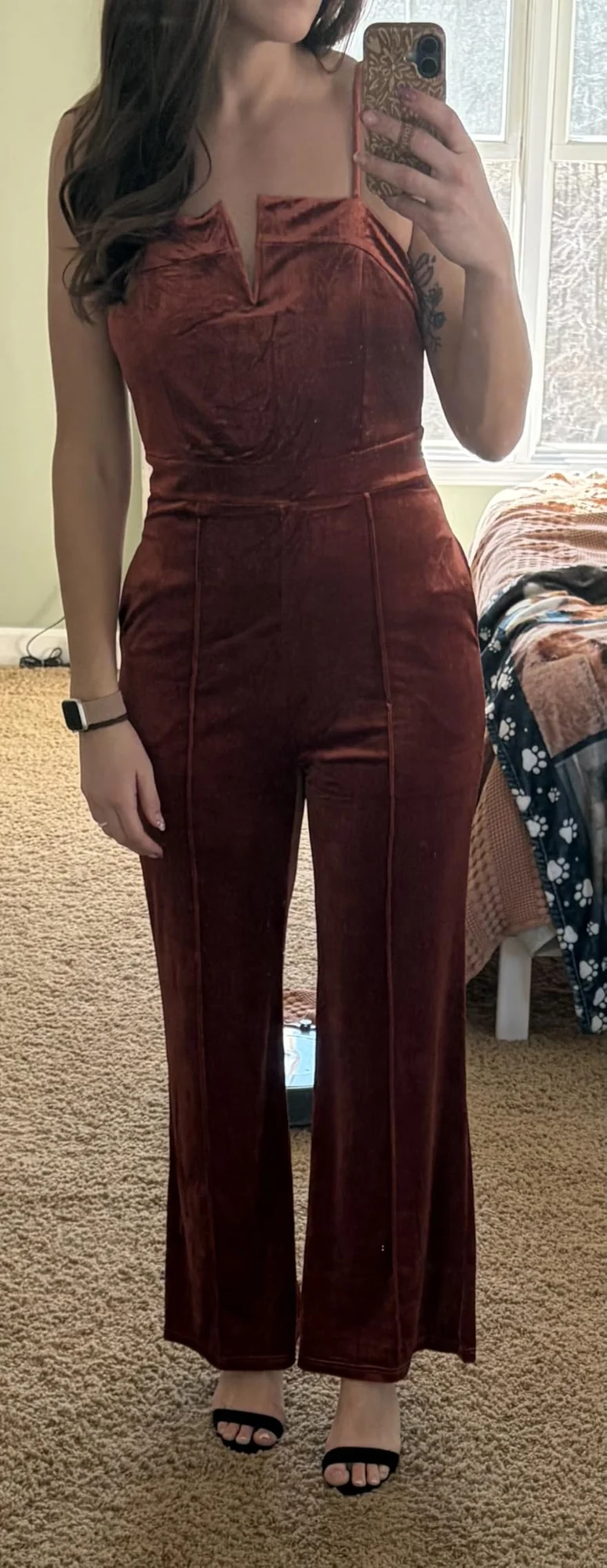
A loose drawstring waist also creates a frustrating trade-off: tighten it enough to create definition and it may dig in, but loosen it for comfort and the jumpsuit can lose its silhouette. The stomach is then left under a broad layer of unsupported fabric that shifts with every movement.
🪞 Watch What Happens When You Sit
Before keeping a jumpsuit, stand in front of a mirror and check the waist. Then sit down without adjusting anything. If the drawstring cuts across the softest part of the abdomen while excess fabric puffs above and below it, the waist is creating tension rather than shaping the silhouette.
Now compare that with a cut that has visible waist definition before you touch any ties. The fabric should already fall with some direction around the midsection instead of needing a tight cord to force the whole garment into place.
The lesson from OFH-AUDIT-4437 and OFH-AUDIT-WHYTM is that more adjustment does not automatically mean more support. A drawstring can be useful for fine-tuning fit, but it cannot replace a jumpsuit that was cut to follow the body in the first place. If your goal is to reduce visual bulk without feeling squeezed, look for built-in shaping—not a piece of string being asked to do the tailor's job.
What Causes Certain Stretch Fabrics to Sag and Bag Out at the Knees by Midday
A jumpsuit can look perfectly fitted at breakfast and feel like a different garment by midafternoon. The knees start bulging, the seat gets baggy, and the fabric slowly drops lower as the day goes on.
One reported case, OFH-AUDIT-4437, summed it up brutally: "It grows when you wear it." The complaint points to a familiar problem with weak stretch fabric—movement pulls the material out of shape, but it does not pull itself back.
Walking, sitting, climbing stairs, and bending all repeatedly stretch the same areas. If the fabric has poor recovery, those stressed spots gradually stay expanded instead of returning to their original shape. By midday, the knees can look pushed out and the seat can lose the fit it had that morning.
↔️ Pull the Fabric, Then Let It Go
Take a small section near the knee or hip and stretch it gently. Release it and watch what happens. The fabric should quickly return close to its original shape instead of remaining visibly longer, loose, or rippled.
You can also pinch the material and compare it with an unstretched section. If the pulled area still looks wider after release, do not expect a full day of wear to improve the situation.
For jumpsuits that need to move with the body, a useful target is roughly 20%–30% stretch recovery. The point is not maximum stretch. A fabric can stretch easily and still perform poorly if it has little ability to recover afterward.
That is why an overly soft, loose knit can feel comfortable in the fitting room but become increasingly shapeless during real wear. Good stretch needs a return trip. Without it, every bend adds a little more slack until the garment starts sagging around the knees, hips, and seat.
The feedback tied to OFH-AUDIT-4437 suggests that buyers should pay attention to how a fabric behaves after stretching, not just how far it can stretch. A jumpsuit that grows larger over a few hours can quickly turn a polished one-piece into something that looks tired before the day is over.
CONCLUSION
The safest way to judge a jumpsuit is to test it like you plan to wear it. Do not rely only on how it looks while standing still. Sit down, raise your arms, bend, and gently stretch the fabric in areas that will take the most pressure.
Check whether thin material becomes noticeably lighter when pulled and whether the fabric returns to shape after stretching. Pay close attention to the crotch and lower torso, especially if you are tall, have a longer torso, or need more room through the hips and thighs. At the waist, look for shape built into the cut instead of depending on a tight drawstring to create definition.
A jumpsuit should still feel comfortable and look put together after hours of normal movement. If it only works when you stand perfectly still, it may not be the right purchase.
THE ULTIMATE BUYING VERDICT
| Verdict | Key Consideration | Recommendation |
|---|---|---|
| 🔴 Significant concerns | Very thin fabric that turns sheer under tension, weak crotch seams, a too-short torso, or stretch fabric that stays baggy after movement can make the jumpsuit uncomfortable and unreliable. | Avoid buying based only on how the garment looks when standing. Test high-stress areas and check the fit while sitting, bending, and moving. |
| 🟡 Acceptable with limitations | A drawstring waist or soft stretch fabric can improve comfort and allow some fit adjustment, but neither can replace good shaping or reliable recovery. | Consider these features only when the jumpsuit already fits well through the torso and body without needing to be pulled tight. |
| 🟢 Meets long-term expectations | Supportive fabric, good stretch recovery, reinforced high-stress seams, enough torso length, and built-in waist shaping can help the garment stay comfortable and hold its shape. | Look for a jumpsuit that stays covered, moves easily, returns to shape, and feels comfortable during normal daily activity. |